Summer of “Love”, part 1

Roger Federer (serving on left) vs Novak Djokovic in the 2014 BNP Paribas Open final at Indian Wells, CA

Roger Federer (serving on left) vs Novak Djokovic in the 2014 BNP Paribas Open final at Indian Wells, CA

August 8, 2014

Summer vacation always flies by, and this year has been no exception.  When you teach for a living and mid-June rolls around, summer stretches out before you with endless possibilities, but then it seems to pass in the blink of an eye.  Even when you know it happens that way and you’re doing your best not to blink.  Anyway, here are some of the tennis-related things I’ve been up to this summer:

First, I need to go back and recap what happened after my last post.  In late January and February I had just made Tri Level Nationals and was playing some really good tennis.  There are occasional stretches- I wish they were more frequent, but I’m lucky to have them at all-, when I seem to be in the right place for almost every shot, when my timing on poaches is precise, and when my strokes feel smooth and easy with limited physical discomfort.  Late winter 2014 happened to be one of those fortunate periods.  I was playing on Dana Lavoie’s YMCA 4.5 team, mostly at second and third doubles, and being competitive in just about all my matches.  Even when I wasn’t winning, I felt like I belonged at that level.   The team wasn’t all that successful because the league was fairly strong and most of the players in Dana’s pool weren’t committed to showing up regularly, but that worked in my favor too- otherwise I would have been on the bench the majority of the time.  I was also on the Willows team in what was now the North Shore “A” league on Saturdays.  When the 5.0+ league, which was one level above ours, disbanded before the 2013-2014 season, many of our competitors picked up guys from that league who still wanted to play high-caliber matches.  But because Willows is a smaller club without true open-level players and the membership fee is fairly steep (which means people rarely join for league play alone- yours truly being an exception), we just carried over our nucleus from the A-1 days with no real additions.  As the other teams began to field 5.0s on the upper courts and strong EMA 4.5s on courts 3-5, our record plummeted.  Worse, guys got discouraged and stopped showing up for the matches.  Our captain- one of the best human beings I’ve ever met- was dealing with the loss of a parent and increased responsibilities at his church, and as a result he lost interest in the team at a time when we especially needed a firm guiding hand.    The upshot is that we often ended up defaulting two or three courts in any given week and were firmly entrenched in last place.  One memorable Saturday at Cedardale I found myself on court 2 with Brandon, a canny 4.0 with a game roughly similar to mine (better forehand, weaker volleys, but the same basic level), against Robbie Newton, a well-established 5.0, and his solid 4.5 partner Matt Nardone.  They killed us in the first set but whether they got merciful and let up or we just came on strong for a while, we actually led 4-1 in the second.  When we were switching sides and out of earshot of our opponents, I whispered to Brandon that we should take a picture of the score cards!  Of course we didn’t win another game after that, so in the unlikely event I get a 4-1 lead on Robbie Newton again, I’ll just keep my big mouth shut.   I was usually paired with players of equal or even lesser ability and we didn’t win much, but if I played well I was very competitive on courts 3-5 and my game was growing.   I was okay with that, because there were still the Tri Level nationals to get ready for. 

Then during my February school vacation, disaster struck.  I was up skiing in North Conway when I awoke one night to a pain in my left abdomen roughly similar, I would imagine without direct experience, to being stabbed.    I could barely move, much less ski, and nothing I tried eased the pain, which on a scale of 1 to 10 might have been an 8- and I’m like a Russian figure skating judge: I don’t give 10s!  I had no idea what was wrong, but I knew it was something serious and without being overly dramatic there were moments when I wondered if that was what dying felt like.  Finally I was able to drive to the local emergency room, which thankfully was just a few minutes down the road, and after almost a full day of tests, doctors there diagnosed me with a kidney stone.    I got lots of medications and had to spend another day or so taking them before I felt strong enough to drive home.   The stone wouldn’t pass on its own for several days after that and eventually I needed surgery.  A friendly receptionist helped me score an early appointment, but the operation still came less than a week before I had to head to CA.  While I was under anesthesia, the doctors found that the stone had in fact passed at some unknown time, but I now had post-operative pain plus residual soreness from the kidney stone to deal with.  I didn’t care, though- I had worked my butt off to qualify for this trip and there was no way I wasn’t going!

So I went, and I didn’t regret it.  Too much time has passed for me to be able to recount that trip the way I’d like to here, but suffice it to say it was truly a once-in-a-lifetime experience.  Todd, Stephanie (Todd’s girlfriend), Kevin and I stayed in a villa in the middle of the desert and had a blast.  We had barbecues and drank lots of margaritas and swam in the pool and watched the pro tennis matches from the Indian Wells tournament, which was being played concurrently with our competition, from reserved seats in the upper reaches of the stadium.   We went to a local park every day, sometimes before dawn, to practice and get used to the thin desert air and also reacclimated to playing outdoors, which we hadn’t done since sectionals in August.  It was hot, of course, but the desert heat was a dry heat and therefore much more bearable than it would have been otherwise.  I tried my best to get my conditioning and timing back but did not fully succeed.  My serve was out of sync, my returns didn’t have the sharpness I had had before my kidney issue, and I was less aggressive at the net.  Per doctor’s orders I was drinking much more water- and far less soda- than I had previously, but I wasn’t at full strength and could only play in one match per day.  It was still amazing to warm up in the shadow of the main stadium at Indian Wells and play on the secondary courts, some of them smaller-scale stadiums in their own right with capacities of a few thousand people, though most of those came to our matches disguised as empty seats.  Occasionally a fan would wander in unaware, watch a point or two and quickly depart in search of the level of tennis he had paid $50 to see.  In our three matches we went 2-1 as a team thanks to the success of our 3.5 and 4.5 teammates, but Kevin, Todd and I lost all three of our individual matches (I played in two of them, once with Kevin and once with Todd).  Our opponents were players of our general level and courteous, friendly people who seemed just as thrilled to be there as we were.  Most of the matches were close and all were competitive.  It was just on us to get better results than we did, and we have to own our failure.  Our team missed getting out of the group stage and qualifying for the semifinals because we had won fewer individual courts than a New York team that we had beaten head-to-head.  Apparently head-to-head is only used is a tiebreaker when it works against us (think back to sectionals)!  Kevin, Todd and I unfortunately grew  to strongly dislike many of our so-called teammates- the feeling was undoubtedly mutual- for reasons that aren’t worth going into now, but I guess that happens when you ‘re thrown together on that type of an  “all-star” team and aren’t truly invested in each other’s success.  My trip was still wonderful in the aggregate.  Federer got on a roll and reached the men’s final, where he played an epic match against Djokovic that was decided in a third-set tiebreaker, and I was actually THERE screaming for him (it didn’t help…)!  That same day I also got to play tennis on grass with my friend Rob Giles, who was vacationing in Indian Wells and got Todd, Kevin and I to make up a foursome at his luxury hotel, which had many different kinds of court surfaces.  I had played on grass once before at the Hall of Fame in Newport so I knew it wasn’t going to be as easy as the pros at Wimbledon make it look, but it turned out to be a heck of a lot of fun anyway.  We were out of our competition by then and it was the one day I actually played well- took the returns early and compactly and volleyed everything that I could before it hit the ground and died.  Maybe we should have some of our USTA matches on grass 🙂

Back in NH, I transitioned directly into the high school coaching season, which ended with our team losing a hard-fought semifinal to our bitter rivals from Keene.  It was an up and down year, to say the least, but our guys grew and we had a big 5-4 win in the first playoff round against Exeter, which had beaten us earlier in the season and eliminated us from the playoffs the previous two years.  High school coaching could be a topic for its own blog, but it never will in my case, because I wouldn’t want any of the players stumbling upon it and reading my candid assessments.  The version they get in practice is probably candid enough for most of their tastes.   Anyway, after the season ended in early June I staggered across the finish line to summer and spent about three weeks on the beach before I even thought about picking up a tennis racquet. 

 When the game is in your blood, though, you can’t stay away.  Summer tennis where I live doesn’t include USTA regular-season matches, but there are quite a few weekend tournaments you can play to stay sharp for the really important stuff.   My favorite is held at Colby-Sawyer College in New London in late July, and that’s where I made my return after practicing for a few weeks.  Colby-Sawyer is located near many scenic mountains and lakes (the view from the courts over the surrounding mountains is spectacular, even when no leaves are changing color), so lots of highly competitive and skilled senior players live in the area for at least part of the year.  Throw in kids from the rapidly-improving Division 3 program at Colby-Sawyer, where the men’s team reached the NCAA’s last spring, and the usual suspects you find almost anywhere trophies are given out- local teaching pros and serious USTA players, most with ratings of 4.0 and higher- and you’ve got the makings of some terrific tennis.  What elevates the tournament even more is that the non-tennis stuff is also first class: the setting is beautiful, there are plenty of refreshments and food available for players and spectators, and sometimes a trainer from the school will even be on hand to ice you down after a long match.  Barry Schoonmaker coached successfully at Cornell for many years before signing on to lead the Colby-Sawyer program, and he does a great job running the event, which is all doubles in various divisions- you can play a maximum of two events, only one of them mixed.   There are a number of friendly and welcoming volunteers who assist Barry and help players feel at home, and even a roving USTA umpire to make things official (on my court, where she seems to be as permanent a fixture as the net post, she’s “Miss Foot Fault”!).  Even if the tennis wasn’t good it would still be worth playing there.  My two events were the men’s open doubles and the century mixed doubles.  In the men’s I teamed up with my good friend and former coaching colleague and USTA teammate, PJ Cistulli.  PJ and I are roughly comparable skill-wise and we have similar games in that we both hit a pretty flat ball and like to come to the net.   He has a little more power than me and probably a little more variation in his level – a higher ceiling than me but a lower floor, if you will.  We generally make a strong team, but since everyone in this tournament is at least a 4.0, we knew we would be tested right away.  That proved to be true in our first round matchup against two of the current Colby-Sawyer players.  One was an incoming freshman from Rhode Island with a smooth style and excellent groundstrokes (including returns of serve).  He had all the shots, but his serves and volleys, although technically sound, weren’t that authoritative and you could tell he probably hadn’t spent a lot of time playing doubles.   His partner was a returning player from the lower end of the ladder whose first serve was much harder than his second.  This kid’s strokes were less conventional but he had a decent net game and a hard forehand, and although he wasn’t particularly fast he hustled and chased down a lot of balls.  Their team hit with more pace off the ground and ours was a little stronger at the net and at times more consistent.   The first set was close throughout with a few breaks of serve, but we were able to get the last one to go ahead 5-4 and then PJ served it out for a one-set lead.   The second set began just as evenly, but the kids started making more winners and fewer errors and took the last four games in quick succession for a 6-2 win.   They had the momentum and we had a total of about 65 years on them, so we were fortunate to be able to play a supertiebreaker instead of a full third set (what are the odds I’d ever have said that, given my usual attitude toward supertiebreakers….).   You could tell they probably didn’t use the shortened format in their college matches because they gave away several points with silly mistakes and allowed us to build a 6-1 lead.  But then they got hot and ran off five straight to even the score, with the weaker player, who during the rest of the match had only converted about 20 percent of his first serves, hitting two unreturnable ones here.  In the next sequence, though, we were able to win both of our service points and take a 9-6 lead.  The big server was up again and we had decided to play two-back on his first serve since that was where he could hurt us the most, and then attack on his soft second serve.   But he wasn’t giving us a look at many second serves in the supertiebreaker, and he started off his turn with a blur on the ad side that I couldn’t handle.  Then at 7-9 he nailed another bomb which hit near the convergence of the two lines in PJ’s forehand corner and took off into the doubles alley.  At our level you really couldn’t hit a better serve.  But somehow PJ anticipated it and blocked a flat forehand which streaked past the netman and down the alley for a match-clinching winner.   From our point of view it was a great way to end a highly competitive match! 

Our success would not last, because in our next match we met up with Colby-Sawyer’s top player, Nate Taschereau, and his partner Cardell Bailey, an athletic and skilled incoming freshman from inner-city Boston.   Although college kids sometimes take older players lightly, I knew we wouldn’t have that advantage because not only had Nate played singles on my YMCA 4.5 team but I had beaten him and another teammate in the 2013 tournament with my friend and “3.5” (according to USTA) player Chet Porowski.   While PJ was an upgrade over Chet, Nate’s game was much stronger than it had been last year and his partner was an even bigger upgrade than mine.   Whereas last year the other kid didn’t have great strokes and his game broke down under pressure, Bailey had big serves and hard groundstrokes along with a nice touch at the net.   We didn’t play badly but we still lost 6-3, 6-2 (they next beat the number one seeds in a closer match and then won the final by about the same score they had recorded against us).  I served and returned reasonably well and we had some success with the Australian formation, especially on Bailey’s ad side (against Taschereau we were better off playing straight up because of the quality of his down-the-line forehand).   We tried playing two-back on the return and hit some good lobs, and there were lots of terrific “hands” points with all four guys at the net  (we even won our share!).  Ultimately though they had a little too much power for us and because of that they were able to win points more easily than we were.  We needed to hit two or three great shots to win a point whereas they could get the job done with one big one.  That made a difference in a number of long deuce games, most of which ended up in their favor.   Still, I felt we had done the best we could and at least made it a competitive match where they had to work hard to beat us.   Tennis is a game of levels and there’s always someone younger and stronger and better than you, and I guess that helps you stay humble.  I myself would rather just be really good and take the risk that my personality would keep me humble on its own, even if that might not end up happening! 

My other event at Colby-Sawyer was the century mixed doubles, which I played at the invitation of a  coaching friend named Lynn Miller from Wheaton College, a small school just south of Boston.   Lynn has been at Wheaton forever- when it first went coed in the late 80s she actually coached a couple of guys from Concord that I had grown up and played high school tennis with.  She’s just a few years from retirement now but still regularly scouts all the high school tournaments, which is where I’ve come to know her.  Lynn and her life partner have a summer place in Sutton, near Colby-Sawyer, and she still has a 4.5 rating, so I was more than willing to team up with her.   I have to admit when I first heard about the century format (combined age of 100 or greater) I thought to myself: “I’m really going to need an old partner!”  Then I did the math, never my strength in the first place, and realized all I needed was a 55-year old.  That was probably more humbling in its way than the doubles match I described above.  Anyway, since Lynn is 63 (and hopefully not reading this, since I just gave away her age), we were good to go. She’s a precise person who wanted to make sure we were fully prepared, even though on paper we looked to be one of the stronger teams.  So I organized three or four practice matches where we played against all-male combinations.  That way I figured it would seem easier when we did end up having women thrown into the mix.  It turned out to be a smart plan which I would use again, but it needed fine tuning.  Playing against two strong men was too much of a mismatch.  Lynn has great hands and a pretty good lefty spin serve despite her slight build, but she doesn’t hit very hard and most teams composed of two 4.0-plus men overpowered her.  If we got a 3.5 as one of the opponents, however (thank you, Mike Constantin, for your flexibility and good spirits) we had a chance to win.

Lynn and I had never played together before and the practice matches gave us a chance to get familiar with each other’s games and come up with tactics tailored to our strengths.  Since Lynn had a lefty serve with decent spin, we could each serve away from the sun and if that meant her starting the set we wouldn’t be at too much of a disadvantage.  I also learned to be more aggressive about taking the middle balls (especially  volleys) than I am in men’s doubles.  I typically play mixed doubles- when I play it at all- exactly as if there were four men on the court.  I don’t step in front of my partner to take extra shots, and for the most part I direct the ball to the best percentage spot and don’t worry about the gender of the opponent standing there.   My other problem is I don’t have an overpowering game and it can take me several shots to win a point even if I do go at the woman, whereas the other man often needs just one hard shot at my partner.  So I’m constructing long points and hitting the ball to what I think are the most strategic places and in many cases the other guy is just bashing every shot at my woman as hard as he can.   It’s not hard to predict the most likely outcome, and unless my partner is either really good or really cute, I don’t tend to enjoy mixed all that much.   Lynn, though, encouraged me to be a little bit more assertive than in a men’s match while still letting her play her game; it can be a difficult balance to strike but overall we came a long way in just a few days of playing together.

The draw in the century mixed was small- three teams- so we ended up using a round robin format.  We played the first two matches and had the bye third, meaning we could clinch the championship before the final round started if we won twice.  Our first opponents looked to be in their mid to late 50s; the male, Dave, was from Woodstock, VT and his partner, Anne, was visiting from the Philly area.  Dave’s strokes were unconventional but he got most shots back, served effectively, and hit 95 percent of the balls- and every lob- to Lynn.  From that alone I could tell he was a more regular mixed doubles player than me!   His game and shot selection would have given us trouble except that his partner wasn’t strong enough to hold her own.  I could hit the ball slightly to the side of her and win the point most of the time, and she kept returning my kick serve into the back fence (she also had trouble just getting out of the way of Lynn’s spinner).   She was a very nice lady and she did get somewhat more comfortable as the match progressed, but we were never in any jeopardy and although many of the points were long we came away with a 6-1, 6-1 win.  That put us into our final match against my old friend Zane Stuart and his partner Beth Moore. 

While Ponce de Leon may have failed in his quest to find the fountain of youth, Zane, who’s pushing 80, has had considerably more success.  I’ve known him since he was 55 and he doesn’t look or even play tennis any differently now than he did then.  Of course Grecian formula may have something to do with the looks part, but that doesn’t work for serves and forehands or I would have started using it long ago myself.  Zane’s serve (low and with some kind of reverse lefty spin, though he is right-handed) is hard to return and his forehand is still a weapon at the 4.0 level, though his movement and some of his other shots probably put him closer to a 3.5 now.   Luckily I have played with and against him often and because of that the parts of his game that others might find especially challenging don’t bother me that much.   For example I know to bend lower than normal on my backhand return and exaggerate the lift on my swing in order to counteract his spin.  I also know his shot patterns- if he’s in the ad court and gets a short forehand he will go hard down the alley 99 percent of the time, and he doesn’t split step coming to the net so if you can lob over him you’ll almost certainly win the point.  I told Lynn about these tendencies and we both used them to our advantage.  Zane’s partner, Beth, was much stronger than the previous woman- I would call her a solid 3.5, but in NH she might even be able to play a low doubles position at 4.0.  She had steady groundstrokes, a tricky underhand second serve and pretty good form at the net, but I was getting increasingly comfortable with my poaching and I may have intimidated her some, because at times she missed or backed away from what seemed like makeable volleys.   Lynn volleyed Zane’s hard forehands extremely well and we were able to use our advantage in court coverage to hit quite a few balls out of their reach.  So while the level of tennis was considerably better than in our opening match, the score ended up the same, 6-1, 6-1 in our favor, and Lynn and I were champions!   I enjoyed playing with her and hope to do it again; we can team up in this particular format as long as we’re both able bodied and for the next few years at least I think we have a chance to do quite well.    That is, unless Nate Taschereau got his killer forehand from his grandmother…

Colby-Sawyer College: A beautiful spot for tennis (and almost anything else)

Colby-Sawyer College: a beautiful spot for tennis (and almost anything else)

Three for the Show

Saturday, January 18, 2014                           Ludlow, MA


Sectionals are here and it’s time to see if I’ve improved enough to be a factor at this level.  I came down last night to the Holiday Inn Express here in Ludlow (“Do you play tennis like Roger Federer?  No, but I stayed at the Holiday Inn Express!”).  There are four teams in the 4.0 men’s competition and we will play all of them in a round-robin format. We have two matches today in Enfield, CT, which is about 20 minutes from here, against CT and EMA. Tomorrow morning we play ME at the Ludlow club.  All of the opposing teams look strong on paper so we are taking it one match at a time and focusing on CT, which features one player recently bumped to 4.5, another who was undefeated in 4.0 singles last year, and a third who dominated  Jeff Hannum and Adam Hirshan in district play, albeit with an exceptionally strong partner.  We lost our opening match in both the 18- and 40- plus sectionals last year and it was so deflating to be essentially eliminated after just a couple of hours of play.  Kevin and I are teaming up in the first match and given that I’ve started slowly in similar competitions, I have resolved to focus on getting out of the blocks quickly.  If I run out of gas after one match, Todd will be ready to come in against EMA  (he has recovered more quickly than anticipated and is probably 75 to 80 percent, though his timing and movement are still just slightly off).  I feel good injury wise (knock on wood) but was congested last night and having problems with my asthma.  I took some medication, got a good breakfast from Friendly’s, and am ready to give it what I’ve got.  I absolutely have to stay positive, focused, resilient and confident, keep a full service motion, watch the TV screen on my volleys and get sideways on the overheads.  I’ve been returning and volleying well of late- even won at third doubles in my first two 4.5 matches , although only one of the guys I beat was actually rated 4.5.  So I’ll do my best and if I follow my keys and compete hard throughout but the other guys are just better, hats off to them. 

Saturday evening

I did what I was hoping to do, but there were still plenty of challenges to overcome in the first day of play.  Getting to the club in one piece was the first of them.  My GPS  eschewed the interstate and led me down a rural road which became suddenly less rural at what seemed like a giant five-way roundabout.  I tried to keep to the center fork, which seemed to be my indicated route, but failed to yield at one intersection and nearly got sideswiped by an oncoming car.  Thankfully the other driver was paying attention or my tournament might have ended before it began.   Equally thankfully, the rest of the route proved much easier to follow, and I made it to the Enfield club in plenty of time for our match amid lightly falling snow.   Kevin, Todd and I passed what seemed like a long time playing ping-pong and disinterestedly following matches from some of the other divisions in the upstairs lounge, which overlooked two courts on one side and four on the other.  CT opted to keep the singles stud on the sidelines and go with two doubles specialists, Al Villadolid (the recently-promoted  4.5) and Lance Dellacroce (the Hannum-whooper).   Al was the more athletic of the two, probably mid-30s, a fairly small guy but quick, aggressive, and hard-hitting.  Lance, who played the deuce court, was about my age and chunkier and less mobile than Al, but he also had smooth, powerful strokes, nice touch and good hands.  We were sent to the most distant court on the four-court side, so I didn’t have to worry about anyone watching.  I felt good as I warmed up and somewhat surprisingly we got off to exactly the start I had been hoping for.  I was sticking my volleys and getting my returns back and Kevin was aggressive at the net and hitting with lots of pace and spin from the baseline.  The other guys were a little erratic at first and seemed surprised that we were taking the play right to them, but before they could straighten things out we ran the set out at 6-1 with three breaks of serve.  With opponents of that caliber you knew it was only a matter of time before they made a run and that’s what happened midway through the second set.   They started to get steadier on their returns and were able to outvolley us at the net on a number of four-player exchanges.   Kevin and I both lost serve after long, frustrating games and we found ourselves down 2-5 with CT serving.  At that point I had pretty much resigned myself to getting ready for the supertiebreaker (given my history in that format, a little extra mental preparation wouldn’t have hurt) but Kevin pumped us both up with his insistence that we were going to come back.  The CT server, Lance, didn’t have an overpowering delivery but we had missed too many returns in the early part of the set.  Here, though, we strung a few good ones together to get a break and then Kevin, still on cloud nine, came up with a big hold.  Breaking Al was trickier because he was capable of some unreturnable serves and got to the net quickly, but we had some momentum by then and were able to make it happen.  At 5-5 I came through with a hard-fought hold and now we were one game away from not having to worry about a supertiebreaker.  On Lance’s serve we twice reached match point and I hit solid returns and came in to the net but both times I hit makeable down the line volleys long.  The second one should have been a put away and I put it away all right, into the back curtain on the fly.   Luckily before I could contemplate that choke too closely, Kevin got me another break point.  This time I got my return low and Kevin saved me further worry by intercepting one of Lance’s volleys with a backhand volley put away into the opposite doubles alley.   Yessssssss!  This was going to be one sectional tournament where we made it past the first two hours!  It had been a really good level of doubles: “10.0 vs 9.0”, as one of our opponents somewhat over- generously termed it, and a very clean match with minimal cheating, gamesmanship, etc.  I felt especially happy because I had beaten guys who I couldn’t have beaten last August, but happiest that we now had a realistic chance to get to Indian Wells. 

We had to wait a little while more before our match with EMA, which had lost to Maine in two close sets.    There wasn’t time to get anything to eat, so we mainly watched some of the 3.5 matches involving people we knew from other NH clubs.   It became obvious too that Todd had not wasted his time as a spectator in the CT match. He now had a number of female admirers from several of the competing teams.  Fortunately I had more pressing concerns than striking out with women, as after our first-match performance Kevin and I were the clear-cut choice to keep the Indian Wells express rolling in the late match.   Only no sooner did we go out to the court than I basically did everything in my power to derail that train short of waving a white flag.  We were on the first court on the opposite (two-court) side, and I could immediately tell that something seemed off.  Whether it was the white background or simply the speed at which our opponents hit the ball, I just couldn’t seem to groove my shots.  Our opponents were Derek, a tall, athletic guy in his early 30s, and Steve, an equally tall but decidedly less athletic player who probably had 10-12 years and 40-50 lbs on me.  Derek looked like someone who had played other sports in his youth and then come to tennis: not all his strokes were textbook, but he smoked his forehand, crashed the net with abandon, got the ball back with his other shots and was nearly impossible to lob.  Steve had a heavy, spinning lefty serve, a hard forehand and a decent high volley.  One promising sign came when he broke a string in the warm-up and proceeded to smash the offending racket for having the temerity to desert him at such an important juncture.  I’m no angel: I once broke two racquets with one swing (a long and embarrassing story for another time)!   But I had never seen anyone break a racquet before a match had even begun.    I thought back to when I had asked Dana Lavoie (who had faced this same EMA team at last year’s sectional) for a scouting report and he had mentioned that one of the guys had a very negative attitude.  He couldn’t remember any names but I had a pretty good idea he was talking about Steve.   The problem was, I just couldn’t keep the ball in play enough to get him upset.  They both served well and I couldn’t return either one of them to save my life.  The ones I did get back were “ice cream” material for the aggressive net moves of our opponents.   I couldn’t even play the net, usually my strongest area, as EMA’s pace and spin caused me to flub several volleys and overheads, to Kevin’s increasing displeasure.  Displeased he may have been, but KP nonetheless raised his game another level or two to make up for my erratic play.  We were down a break at 2-3 and then, in the blink of an eye, we had won the set 6-3.  I think I got one return back (maybe two) in each of the return games and I held serve.  Kevin did the rest.   Forehands, backhands, volleys, overheads, he had them all going.   My one contribution was to put us into a two-back formation on the return, chiefly so Kevin wouldn’t get killed when I was returning, but also to negate EMA’s poaching and fast closes to the net.  That took away their quick-strike ability and extended the points, which played into our hands (more balls for Kevin to hit…).   As the set ended in a barrage of curses from Steve, I felt like we were in good shape.  I had played D-level tennis and we were still ahead.   The second set confirmed that assessment.   I got a few more balls in play, the two-back continued to work, and Kevin’s level stayed high.  EMA no longer had the element of surprise that their unorthodox games had given them earlier, and Steve was becoming tired and discouraged, to the misfortune of those on the adjacent court who had to play a few lets in the wake of his F-bombs.   We got up 3-0 with two breaks and then I felt a cramp in my right hand as I went up to the baseline to serve.  Whether it was nerves, fatigue or just holding onto the racquet too hard, I was starting to go numb in that part of my body and lose control of my function.  My first thought was “Oh shit: this is the only way we can lose this match!” It only really bothered me when I raised my hand up high, so given Kevin’s play and the mindset of our opponents I knew if we were to go up 4-0 they probably wouldn’t catch us.  Some of the serves I hit that game weren’t pretty but the bottom line was they went in and our opponents couldn’t capitalize.  Two games after that we were shaking hands (well, with Derek, anyway; Steve was off picking up his racquet). 

Following the Eastern MA match, Todd, Kevin and I went back for dinner in the sports bar of their hotel, the Springfield Marriott (Stephanie had stayed home to play some USTA matches of her own).   After we had eaten, we were all waiting for the elevator in the lobby- in that hotel the exit to the parking garage is on an upper floor- when we narrowly averted another unpleasant incident.  Kevin is 21 and macho and doesn’t back down from anybody, so he tends to have issues with people fairly frequently.   In this case he had asked me to use his phone to take a picture of him and Todd, but there was an older guy standing just behind them who was messing up the shot.  The guy hadn’t put himself deliberately in our way but when Kevin asked him to move he didn’t react politely either.   Kevin started giving him shit and then this guy who looked to be about 70 but mean and ornery yelled back at him and threatened him.  By this time our elevator had arrived but Kevin was now pissed and had this look in his eyes that he wanted to go after the guy.  Unless he had some kind of weapon or a high-level black belt, this guy would not have fared well against the three of us, but we were one match away from nationals and the last thing we needed was any kind of trouble.  Thinking quickly, Todd yanked Kevin into the elevator, pressed the door shut before the old guy could react, and we had gotten past our final challenge of the day. 

Winning that second match put us in the driver’s seat in the competition, as Maine had lost to CT in two close sets.  If we beat Maine the next morning, we would punch our ticket to California, but even if we lost, we still had a great chance by my calculations given the low number of games (9 in two matches) and sets (none) we had lost up to that point.  It wasn’t quite locked up, but it was tough to see a scenario where we would lose.  Unbeknownst to me, there had been recent rule change: in the event of a tie between two teams, the head-to-head result between the teams would now supersede the fewest games and sets lost.  So if ME beat us head-to-head they would get our spot if MA beat CT.  If CT won that and they ended up breaking the resulting three-way tie with sets and/or games lost, we were in pretty good shape.  The more I obsessed about it, the more I realized it was very simple: in the immortal words of Al Davis, “Just win, baby!”  We controlled our own destiny, and I didn’t want it to come down to some tiebreaker.  I wanted to be on the court and feel what it was like to win that last point and make it to a national tournament.    In a must-win situation in the 4.5 team sectional final in 2006 I (as captain) had sacrificed my partner and myself against the opposition’s strongest doubles team and lost badly- but our team won 4-1 to go to nationals.  This time, though, there was no Blake Wayman or Dave Taylor to cover for me.  This time it would be up to me. 

Sunday, January 19

Sunday came and I was a little tired and sore, but as I drove the five minutes or so to the mud-red courts of the Ludlow Tennis Center I knew there was no way I was sitting out.  Kevin and I were our best hope and all we needed was one more win to bring the championship home.  It was anything but a done deal.   All three of the players on the Maine team were lefties with good doubles skills.  I don’t really practice with any lefties other than Chris McCallum, so returning their serves (especially from the ad court, which I was now playing) presents a challenge.    This is especially true when they serve well, and both of Sunday’s opponents-Phid Lawless and Alan Toothaker- served well.  They were in their early to mid 50s, solid doubles players in the classic serve-and-volley mold.  Lawless was taller and steadier off the ground.  He had some trouble on low volleys but hit the high ones very well.  Toothaker was more of a shotmaker and had a harder-hitting but more erratic game.  Todd had told me that I wasn’t stepping into my returns enough yesterday, especially on the backhand side, so I resolved to do that better.  I had had a wonderful individual sectional at Ludlow back in 1997, playing some of my best tennis and reaching the finals of the 4.0 division with back-to-back three-set wins over Dave Goodhue and Steve Wiles, two of my fiercest rivals at the time.  So while there were no off-key singers warbling “On the Wings of Love” in the hotel lobby in 2014 and I had a lot more wraps and braces on various body parts (and less hair on my head), I also had positive memories of this club and sometimes that’s all it takes to get your mojo back.  The courts at Ludlow seemed a little slower than at Enfield and it was easier to see the ball out of the background.   So while I didn’t return all that accurately in the opening set, I did enough to get one break and Kevin and I had little trouble in our own service games.  We took the set 6-3 but it was a comfortable-feeling 6-3.   To our dismay, Maine rid us of that comfort level quickly in the second set.  Kevin got a little sloppy and dropped serve in his opening game and although we were able to break back later in the set, we always had the feeling of playing from behind.    Our opponents served better and upped the level of their net play to boot.   On many points we played well but they were just too strong.   Kevin’s game wasn’t at the level of the day before and he called a number of close balls out (I had to reverse some of them, which I don’t like to do, but in this case I thought it necessary) which seemed to anger our opponents and enhance their motivation.  My returns remained erratic but I was really volleying well and hitting my overheads with authority.   I ran quickly back to cover one lob from Toothaker which spun crazily, but I was still able to get my racquet on it and lift it over the Maine duo’s heads for a crosscourt winner.  Don’t count me out just because you see that big knee brace I’m wearing: I’ve still got the want-to to track balls down!   Later in the set I played one of the best first volleys of my life.  Toothaker absolutely ripped a crosscourt forehand return from the ad court but I just knew the exact spot it was headed for (a spot that had produced many clean winners on my cream-puff serve over the  years).  This time I resolved to beat the ball to that spot, got my racquet and body as low and as far forward as I could, and just stuck the backhand volley crosscourt.  The ball came back so hard and fast that Toothaker, who thought he had a winner, couldn’t even react to get his racquet on it.  In that same service game I ranged wide on the deuce court for a low first volley, poked it low toward the net man, then flashed back to the middle before he could get his next shot through the opening and won the point again.  I play more on instinct and feel than on power and I just felt a really positive flow in those moments.   Still, despite all that, we weren’t able to break Maine again, so we ended up in a second-set tiebreaker.  

At this point I finally realized that I needed to wait a little longer on Lawless’s serve and just react as quickly as I could on Toothakers and take it out in front with a good follow-through.  I began ripping the return of serve and we got up 4-1 with me serving two.  Here, though, I started to get tight, double-faulting one of the points away and losing the other.   We still eventually got a match point at 6-5.  At that point so many emotions started to go through my head, I was thinking of winning the match and of my mom and dad and that maybe they were watching someplace and happy.   That was a big mistake because I shortened up my return of Toothaker’s serve and netted the potential match-clinching shot.  We went up 7-6 but then I had to serve again and double-faulted once more, a gruesome one into the very bottom of the net this time.  Somehow I came back from that choke job and hit an ace down the middle on the next point (this is not a typo…) to give us one more match point, but we lost both of our returns on Lawless’s serve and then Kevin double-faulted to end the set.  We were both unhappy with our play in the tiebreaker but with so much at stake we had to put the result behind us quickly and turn things around in the supertiebreaker.  I had won a few of them in matches and practices, and I was starting to get my timing on my returns, so I had some reason to be confident, but I was worried about my serve.  The first few points were close and evenly played but then towards the midpoint we both had some big returns, and despite another of my double faults we went up 8-5 with Maine serving (and Kevin on deck with a chance to serve it out).  After an exchange of several shots, I had a nice cross on a high floater which seemed to take Lawless by surprise and he missed the resulting volley.   Now we had four match points, but all we needed was one as Kevin caught one of his big forehands perfectly to put a winner down the alley- and us onto a plane for Indian Wells! 

I didn’t know what to expect, but this is what I got: probably the best feeling I’ve ever had on a tennis court.  In that instant all the hours of work to come back from my injuries, all the losses, all the doubts, frustrations and fears faded away.  There wouldn’t be any headlines trumpeting it, but in my own small way I was a champion.  Kevin and I both let out loud yells and then did a celebratory chest bump and hugged each other.  I told him “thank you for helping me experience this feeling”. Then we left the court and Todd greeted us at the door and all three of us started screaming and whooping and hollering like we had just made the Final Four.  It’s a wonder we didn’t cut any of the nets down, although I’m sure the Ludlow club is just as happy we didn’t.    The rest of the day was a blur.  The USTA gave us silver-gray pullovers and had us pose against one of their official backdrops for our championship photograph (I even smiled in one of them, that’s how happy I was).  We took many more pictures of ourselves, and some quickly became Facebook posts and Twitter tweets.  We accepted congratulations from club staff (including the ubiquitous Edsel Ford) and from some of the other teams and briefly watched a few of the other divisions that hadn’t yet finished.  We didn’t learn this until later, but Todd’s biggest admirer won with her 3.5 women’s team from Martha’s Vineyard, while our Algonquin friends Mark Blaisdell and Andy Day (4.5) and Mountainside’s Jeff Adie and Scott Goodwin (3.5) came up just short against teams from Connecticut.  Todd and Kevin had a 4.0 match back at Algonquin to play and the drive was long, so none of us lingered.  I showered and made my way to my car and then just before I got in stopped and looked up at the sky and said a few things to my parents.    For such a clear day, it got rainy awfully fast right about then.   Of course, it is New England, after all, and on this day Kevin, Todd and I are NEW ENGLAND CHAMPIONS!

Tri-Level Triumph!

I thought I’d made my last trip to Springfield for sectionals after getting the dreaded year-end bump to 4.5.  Then I found out I still had one last shot, for I was entered in a relatively new form of USTA competition called Tri-Level, which is based entirely on the early start ratings (meaning I was still, for these purposes, a 4.0).   Tri-Level, at least in New England,  is basically a multi-stage tournament to identify the best doubles teams at the 3.5, 4.0 and 4.5 levels.  You can have up to four players on your “team”, but they all need to play a certain number of matches,  so in practice teams are generally composed of two or three players, and you have the ability to progress through your local “league” to sectionals and even Nationals, just as in regular USTA league play.  I had never taken part in Tri-Level, but Todd had played several times and thought it would give us some good practice for our league matches, if nothing else.  We took on a third player, Dan Horan, because Todd was scheduled to have hernia surgery in mid-December and so would likely be unavailable, or at least limited, if we were to qualify for the January sectional. 

In NH this year there were two round-robin qualifying tournaments (or, in USTA parlance, “local leagues”), one in early November at Mountainside and one on Thanksgiving weekend at the YMCA.  Due to scheduling conflicts on the earlier date, we signed up for the Thanksgiving tournament.  That turned out to be a wise move, because the Mountainside qualifier featured four strong teams, all of which would likely have been favored against our triumvirate.   Chris, Adam Hirshan and Bryan from our Algonquin team went up and actually came in last, so strong was the competition.   Glenn McKune and B Manning from the host club emerged victorious (3-0 match record), defeating their USTA teammates King and Atherley (2-1) in the decisive final match.    

Thanksgiving travels and prior commitments limited the YMCA draw to just two teams, but it would still be no easy task to get by the host entry of Dana Lavoie, Mike Delaney and John Smith.  Dana and Mike lost only once last season at #1 doubles, including a win over Siegel and me (even though my game had seemingly improved since then, Siegel was probably two or three tenths stronger than Todd on the USTA scale, so we still had our work cut out for us).  Neither would we have any respite against John Smith, who had just been bumped down from 4.5.   We caught what turned out to be a big break, though, when the Y was unable to field a team on Saturday, which was the only day Dan could play.  This allowed Todd, after some searching, to add the much stronger Kevin Phelps (home from Plymouth State for Thanksgiving) to our roster in Dan’s place.   In accordance with USTA local regulations which require at least four matches in a two-team “league”, we would play twice on Friday and twice more on Sunday and follow normal USTA tiebreaking procedures if it ended at two wins apiece.

For the Friday matches I was scheduled to play with Todd first and with Kevin second, while the Y put their strongest team of Dana and Mike in for both matches.  Given that I would have to play twice, and at least once more on Sunday, I came out with the mentality of pacing myself instead of going full-bore from the start as in a one-off USTA match.  This turned out to be a costly error.  We squandered a couple of break points on Dana’s serve in the opening game and then before we knew what hit us we were down 0-4.  Actually, we did know what was hitting us: Dana’s inside-out serve and supersonic forehand (which combined both pace and heavy topspin), and Mike’s laser-beam backhand.  We just couldn’t stop them.   I wasn’t serving well and they were crushing the returns, particularly Dana, whose ball we both struggled to volley.  Todd served better than me but had problems with his return.   I didn’t have the same level of play as the previous weekend at Hampshire Hills and I didn’t have the competitive fire to get back into it the way I should have either.  We dropped the first set 6-2 but the second was only one break’s difference (6-3).  With just a little more energy and conviction we might have brought it to 5-5, at which point anything is possible, no matter how badly you’ve been outplayed previously.  I didn’t hold serve the entire match and as sometimes happens I let my discouragement with my serving seep into the other parts of my game and affect them negatively. I didn’t even have the spirit to get angry and fired up.  Todd persevered mentally and played reasonably well but he’s just not good enough yet to carry me against a team of that caliber.  We were outclassed in every phase of the game and at times came close to being embarrassed.  It was the worst beginning imaginable.

In USTA play there’s no room for ego, and I knew I wasn’t in the right frame of mind to keep playing that day.  Todd and I both agreed we had a better chance with him partnering Kevin, and that ended up being the case.  The Y guys don’t volley that well and Kevin’s heavy topspin down the line returns bothered them.  During the points he was able to go toe-to-toe from the baseline with them and even force some weak returns which Todd could take advantage of.  Both our guys served well and we were able to come through with a hard-fought 6-4, 6-4 win.  So at the half-way point, we each had one team win and we were also even on sets, but they had won three more total games to take a slight lead.  On Saturday, with no matches scheduled, we strategized back and forth via text message about our lineup choices for Sunday.  We felt we needed Kevin in the lineup for both matches, so the question became which match to play Todd with him and which to play me.   While neither of us knew what role, if any, Smith might play, we both thought the Y would use their strongest lineup in the second match, so given what had happened on Friday we decided to put Todd and Kevin second.  I was discouraged by my performance on Friday but determined to make amends, and Todd’s confidence and game were in a good place (Kevin’s confidence is pretty much always boundless…). 

Sunday came and the Y’s lineup played right into our hands, as they used Smith with Delaney for the first match and with Dana for the second.  While Mike and Dana are both excellent players, with all things being equal I would rather face Mike.  He hits a slightly slower ball with less spin which is easier to volley, and his serve is even weaker than mine.   And even though Smith had been a 4.5, I’d never faced him, so I didn’t have any negative preconceptions of how the match might go.  He turned out to be a solid player with nice strokes, but nothing really special or overpowering.  I gave Kevin his preferred deuce court, where his forehand is most effective, and took the ad side.  We both returned well, and his attitude was positive and supportive throughout, which helped me get my confidence back.  I committed to being aggressive at the net, and I found plenty of opportunities to poach off of his heavy groundstrokes.  When the time came, I watched the f’ing ball as well as I could, took it out in front and volleyed to the open space (they were generally in a one-up, one-back formation, which made this easier).  After losing my first service game, I also switched to starting from the backscratch position a la Jay Berger in the 1980s.  It didn’t look pretty, but it gave my serve a better kick and made it harder for them to hit attacking returns.  They are both tough competitors and they never gave up, but the momentum stayed on our side and when the dust cleared we had a 6-1, 6-2 win.  At the end Kevin was even more amped than usual and I was thrilled to have bounced back strong.

With Kevin and Todd set to take on Smith and Lavoie, the odds were now in our favor due to the decisive nature of my win with Kevin.  We could win through to the next round of the competition in one of three ways: 1) a straight-up victory by any score, 2) a loss in which we won one set or 3) a loss in which we won at least seven total games.  It still wouldn’t be easy, as Dana is capable of running up some big numbers and we couldn’t afford to lose by more than one break per set.  Thankfully our guys came out and picked up where they left off on Friday with a dominating first set performance, winning 6-2 to end the suspense quickly.  After that, the other guys (Smith in particular) raised their level while Todd let down and Kevin made a few too many mistakes, and we ended up losing in a supertiebreaker.

It was a great team win, made bittersweet by the USTA bumping me up to 4.5 in the year-ends the following day, which meant that the Tri-Level competition would be my swan song in 4.0 play.   And even our success there promised to be short-lived, for we hadn’t made it to Springfield yet.  Since each New England state could send just one entry at each level to sectionals, we had to play off against Glenn and B, the winners of the other flight and clearly the state’s top 4.0 team, for the right to represent New Hampshire.  Todd, Kevin and I pressed for a two-out-of three match series, which seemed only fair given that we had had to play four matches against the Y team just to make it out of our flight.  To our dismay, though, the decision was made to have a single-match playoff.  Even worse, the playoff was set for a Sunday in early December when I had committed to attend a presentation in Haverhill that was dedicated to my father and his historical work.   Given the way Todd and Kevin had played in the qualifier, plus the fact that Todd would likely have to miss sectionals, it was only right to have those two team up for the winner-take-all showdown anyway, but I regretted not being able to watch and cheer them on from the sidelines.

A few days before the Championship match, something strange happened.  I had shared my disappointment with the scheduling format in a short email to Adam Hirshan, who serves as NH’s Tri-Level coordinator.  Adam’s reply contained nothing beyond the usual formalities, but below his e-signature was a long sequence of prior messages between him and Mountainside, and in one of them B noted that because of an availability conflict with the date of sectionals, he and Glenn would default to us if they reached match point.  I mentioned it to Todd and we considered how to take this news.   With so much at stake, we couldn’t discount the possibility that it was some kind of bluff or gamesmanship on their part, although B is known as a straight shooter.  We decided that he and Kevin would approach the situation as if Mountainside was playing to win and we needed to have that same win-or-else mentality.  I found out later that it had been a terrific match.  Todd and Kevin played great to win the first set, but B and Glenn, who don’t get rattled easily, came back to take the second comfortably.  In the supertiebreaker, B and Glenn led 8-5 when a return by Kevin that seemed to have been a winner was called out by B. At that point B and Glenn came to the net and defaulted (I later learned that B is in an MBA program at the University of Chicago and needs to be out there on the weekend of Jan. 17-19, when sectionals will be played).  Our guys were a little confused about the score at first but eventually realized the situation and accepted the default. 

I guess making it to sectionals on an opponent’s match-point default isn’t exactly the ideal scenario.  Still, it wasn’t as if were down 1-6, 1-5 at that point.  Kevin and Todd had been competitive in forcing a supertiebreaker (B and Glenn rarely lose sets) and even there they still had a small chance of winning from 5-9, and a greater chance from 6-8 if they had gotten the call on Kevin’s shot reversed- they certainly would have argued the point had the match not ended right then.  Maybe B and Glenn should have defaulted at the local level to allow King and Atherley to progress and possibly beat us, but they didn’t.  We had to work hard and play well just to get out of our flight and have a chance to benefit from our opponents’ largesse in the final.  And in the next four weeks Todd will bring his usual intensity and focus to rehabbing from his surgery while Kevin and I will try to keep our own games as sharp as possible.  When the time comes, I think if our games and mind-sets are right, we have as good a chance as anyone to make it to Indian Wells and the Nationals.  I know I’d better approach it with a sense of urgency, too, since it’ll most likely be my last real chance to make it to any kind of Nationals for a very long time. 


Out With a Bang

I meant to publish the previous post last month but it inadvertently stayed in draft form until just now, which means there’s a double dose of posting coming up on this Christmas Eve! The world’s no doubt waiting with baited breath.

The 4.0 season couldn’t have started any more promisingly. Our first match was against another team representing our own club, and we swept all five courts without losing a set. This match was a little bit awkward because Chris had sent some of the weaker players from our 2013 team over to the club’s other entry to give them increased playing time, and now we were facing them in the very first match of the year. Most of their guys were quite frankly closer to 3.5 than to 4.0, though, so the awkwardness didn’t end up costing us any courts. Rick at 2 singles, Brian Horan and Chris at 1 doubles and Mark Paquette and Mark Lande at 3 doubles all cruised. Adam Lesser rallied from set point down to defeat lob-crazy Ken Gould 7-5, 6-2, and Todd and I got by Dan Piatt and Paul McManus, 6-2, 7-5. We started off comfortably in control but we both missed a lot of returns and in the second set that nearly cost us because it let the other team hang around. My serve had more oomph than last year and we were holding comfortably throughout until 4-4 in the second, when our opponents got two balls right on the baseline, a mishit winner and a net cord winner to break Todd. I was pissed at our misfortune, but Todd settled me down and we broke Paul in a long deuce game. He was one of the guys who played on our team last year and although he played a terrific match overall I felt like he got tight at that juncture and maybe had that slight hesitation about whether or not he could actually beat us (believe me, I’ve been there…). Then I held after being down 0-40 and surviving many more deuces. Missing two such golden chances seemed to deflate our opponents and Piatt (who had had a big first serve and a heavy, consistent forehand throughout) dropped serve to 15, ending on a double fault. It wasn’t pretty, but they all count…

Thankfully, we raised our level of play significantly in our next match, against River Valley Club (in between, the team had also beaten Manchester Executive 3-2 in an away match I missed because of a Haverhill commitment). Scores of 6-0, 6-0 are rare in league play because most everyone plays at a reasonably similar level, but we were able to record one against RVC. I really had my serves kicking up high, with good movement, and few of them even came back. My returns were low and precise, and my volleys were sharp and firm. Todd was on his game too. While with that type of play we would have been competitive with just about any 4.0s in the country, our margin of victory was also attributable to the quality of the opposition. Both men were gracious, friendly people, but when your opponents start asking you for tips on improving their games during the middle of a match, you know you’re not in the most competitive situation imaginable. I also helped settle down Chris, who along with Waldvogel was trailing 1-4 in the opening set of the 1 doubles match. I went over to him when we were both changing sides and he was kind of wide-eyed and panicky, saying he just couldn’t get anything going. I had seen the other team was a baseline-oriented team so I just told him that if he got more active at the net he could take over the match. He seemed to be more positive and aggressive afterwards, while Joe’s play, which at that point had plenty of room to improve, also got better. They stayed in the set and then got more intense after absorbing a series of questionable calls. Ultimately they took the set in a tie-break, after which the opponent who had been making most of the bad calls self-destructed in a series of screams and racquet throws, and the second set went quickly in our favor. We won the overall team match 4-1, with Rick at 2 singles and Paquette/Hirshan at 3 doubles cruising against players of a similar caliber to what Todd and I had faced. Neal lost at 1 singles to Rick Hines, a deceptively good singles player recently bumped down from 4.5, after a close first set. Rick gets everything back and has an amazing backhand; the only real way to beat him is from the net, and that’s not where Neal is most comfortable. Still, we took the overall match 4-1, and it’s tough to complain about that outcome.

At that point we had three wins in three matches, by an average score of 4-1, but those wins had come against what were quite possibly the league’s three worst teams. The road to the Nationals was about to get a lot bumpier as we were scheduled for back to back matches at Mountainside and at Hampshire Hills. The Mountainside match was, for me personally, the low point of the fall season, and yet it started so auspiciously… First of all, we caught the home team on a rare King-less day, as Richard was accompanying his wife to a national tournament she was playing in with her father. For Mountainside, a team so dependent on number 1 and 2 doubles, to be missing one of those four players was a huge break for us. The match began with singles, and our good fortune seemed to be continuing, as Lesser demolished Tim Lesko and Rick was up a set and a break against Jon Mellen, who to that point had never beaten him. One of Rick’s strengths under normal circumstances is his ability to beat the guys he should beat, and it’s also rare that he blows a lead, but that’s what happened here. Mellen got more conservative with his error-prone backhand, allowing him to extend points and ultimately win many of them when Rick missed some sitters and put aways near the net. The match went to a supertiebreaker and here again Rick led comfortably (8-4) but could not close the deal, and Mellen came back to win 11-9.

When you’ve played competitive tennis for almost 30 years, you have to be able to put the negative outcome of a teammate’s match behind you and just do your own thing, but I failed miserably. I could tell early in our match against Ken Limburg and Rich Atherley that things weren’t right. Normally low volleys are my bread and butter, but I was missing them repeatedly, and my service returns lacked rhythm. Then I started forcing things and getting more and more frustrated. Todd kept telling me “be more aggressive at the net, be more aggressive”, and I tried, but in doing so I took my eye off the ball and looked too much at the opposing players, resulting in innumerable mishits and a failure to execute even the simplest put-aways. Todd’s return was off, and his dislike for the opponents didn’t help him stay calm, but make no mistake: this one was on me. We lost the first set 6-4 and then fell behind 4-0 in the second with Limburg giving us his Cheshire cat smile and Atherley smirking to his girlfriend in the gallery in between points. If there had been a hole in the vicinity big enough to fit me, I would gladly have gone in and not come out. Lacking any such cover, I redoubled my efforts, but it just wasn’t to be as the second set ultimately went to Mountainside by 6-3. As Chris and Bryan had gotten blitzed by the Algonquin-killers, Glenn McKune and B Manning, we came away from the mountains tasting our first defeat of the season, despite Adam Hirshan and Neal pulling out a close third doubles match. If I had to distill the lessons of this match into a quick sound-bite, it would be “keep your on the eye on the fucking ball- and be aggressive with your feet by taking the volleys more out in front”.

There was no time for gnashing of teeth, though, as two short weeks later we made the journey to the hockey rink that is Hampshire Hills. While HH brought both strength (a top-flight lineup) and numbers (several guys not playing came to the match just to cheer), we had to endure several last-minute cancellations even to field eight players, although perhaps not the eight we would have normally chosen.
The result was predictable: a beat-down the likes of which the Algonquin team had not suffered in quite some time. Wily veteran John Forsyth used his 30-plus years of experience on the HH surface to get revenge for 40-plus districts on Adam Lesser at 1 singles, while Rick came up short on court 2 despite a typically workmanlike effort. Lacking confidence in our doubles pairings, we went with a 2-3 stack and threw Paquette and Lande on court 1 against our friends from districts, Nieva and McQuade. Paquette really did play well but the HH team blended power and consistency whereas our guys didn’t have much besides power. The second set was competitive but the outcome was never truly in doubt. Third doubles was a disappointment. Playford got psyched out by the unconventional surface and before he got his bearings he and Hirshan were down a set. One loose service game in the second was all it took a decent, but beatable, HH pair to nail down win number 4.

If there was one consolation about this HH match, it was that I finally came up with some truly kick-ass tennis, turning back the clock six or seven years to when I was a solid 4.5. Let’s just say that as bad as I was against Mountainside, I was that good at Hampshire Hills. Occasionally (though all too infrequently), all tennis players get the feeling of being in the zone, and that’s what happened to me. The ball doesn’t look bigger, but the court on the other side of the net looks gigantic. I used every bit of that ocean of blue to good effect as we beat Tim Poole and Rick Schwerdtfeger, two strong 3.8- level players, 6-2, 6-2. Although we are friends off the court, Chris and I had not played well together as a team in our previous matches, but this time I suggested I switch to the ad court because my return could be more of a weapon there. That turned out to be the case, as I took the ball early and kept it low, and although Chris struggled to get his backhand return crosscourt he did a good job lobbing and hitting it down the line, where the opposing net man wasn’t able to do much with the resulting high backhand volleys. I volleyed exceptionally well, taking the ball out in front and stepping when I could, and keeping my eye squarely on the f-ing ball to boot. The other guys were big hitters and one time Rick smashed a forehand right at me but I took it early on my backhand volley with a little step and BAM! winner down the middle before they could react. I probably couldn’t replicate that shot if I tried, and Chris just gave me a look like “is this really you?”. I was feeling it so much that I tried a wide serve on the deuce court with some nasty spin and hit it perfectly for an ace. At that point all you can do is smile and enjoy the ride and hope the match ends before the clock strikes midnight. In this case, luckily, that’s what happened.

Just when I felt like I was beginning to play the kind of tennis I had been working for so long to bring out, reality dealt my hopes for a return to Springfield a crushing blow ten times the velocity of that Rick Schwerdtfeger forehand. For in USTA play, the early start ratings for a given year are only valid until the year-end ratings come out in December. Normally there are very few changes from early start to year-end, and that held true in 2013. In fact, only two NH players went from 4.0 to 4.5 during this time frame: Peter Rouvalis and me. I tried appealing, hoping I was only a fraction above the 4.5 threshold, only to learn that for a benchmarked player who had participated (however ineptly) at sectionals, that’s not an option until one calendar year has passed. I didn’t know what had caused my rating to spike: my big win at HH? a win at nationals by a guy on the EMA 40-plus team that PJ and I had crushed at sectionals? Regardless of the reason I was bumped, the whole process discouraged me greatly. I had had a losing record (when districts and sectionals were factored in) in 2013 and now with my game finally making the necessary strides, I won’t be able to make another run at nationals with a group of guys that I really enjoy playing with. And, of course, the diary of a 4.5 nobody will be much less interesting….

There was, however, one last order of business at 4.0. Apparently when you get bumped up by a year-end rating, you have a ten-day grace period during which you can still play at the lower level. It makes some sense because a team may have already put its lineup out for a match just a few days hence, only to have one or more of those guys unexpectedly bumped. And so, with mixed emotions, I went to the Hampton Tennis Barn not long ago hoping I could make one last contribution to a districts berth for the Algonquin 4.0 team. That contribution would not come without a fight, literally. Todd and I were matched at second doubles against two guys named Mike and Frank, neither of whom I had any prior experience with. Frank had a heavy serve and a nice forehand, and Mike had good feet and a hard forehand, but they are just run of the mill 4.0s, at best. I was locked in and hitting well, and Todd and I really should have taken them out quickly, but he was sick and had trouble seeing the ball against the background of the Hampton club, so we found ourselves in a long and increasingly contentious match. We took the first set 6-3, but it was anyone’s match, especially as Frank began hooking us on a number of calls. I’ll be very honest here: I’m an intense player to begin with, and I get even more fired up when I believe (rightly or wrongly) that a guy is cheating me. I’ve played competitive tennis for a long time and I’ve seen guys in tournaments and in the super competitive Eastern MA league pull all kinds of shit and generally speaking I just will no longer take it lying down. I wouldn’t classify myself as a macho or tough person but in those types of environments only the strong survive, so that’s the competitive frame of reference that I have. Midway through the second set, with me serving at 1-2, 40-0, Frank loudly announced that he was going to be calling foot faults on me from now on. I know I foot fault, particularly when I get tired, and I understand it’s against the rules, so I can’t get angry at someone for calling it, although I think it’s a cheap way to win and have never, ever called it on an opponent, even one who was calling it on me. I respect opponents more if they at least call it from the beginning of the match, but a lot of guys save that stuff for a last resort when losing is imminent, and clearly Frank fell into that category. I was a little flustered and went from 40-0 to deuce, then several deuces, but finally held with a sharp volley and pumped my fists and smacked the ball to an unoccupied area of our opponents’ court. Only Frank took exception to that with a sharp remark, at which point we started debating what was and wasn’t an appropriate way to return a ball to the other side. He wouldn’t let it go, and I started to really get angry and went back up to the net and argued with him some more. Things got hot and heavy at that point between all four guys and at one point he told us to “Screw off” so I not so cleverly countered back with “Fuck you”. Frank then completely lost what few marbles he had, first yelling out “he’s swearing, he’s swearing”- maybe in an attempt to get us disqualified- then asking repeatedly if I wanted to fight, saying he, Frank, loved to fight. Back in the day, God only knows what I might have done at that point, even though Frank was a big guy and the outcome of any fight wouldn’t have been a given either way. This time, though, I stayed composed enough to just walk back to the baseline and get back to tennis. They went up 4-2 as Todd continued to struggle with his game, and we were both now seething mad at Frank, who threatened no further violence but continued to hook us with abandon. Eventually Todd started getting the ball in play, and I followed the formula of serving (or returning) down the middle of the court and playing volleys conservatively and far from the lines until either I had an easy put away or they screwed up. And by doing that we took four games in a row to win the match. There was no fighting either at or after the handshake. Frank was even apologetic by that point but Todd and I just shook his hand in silence. I was glad that we recovered our composure in time to win, but unhappy with myself for letting a player of so little talent get into my head to the point that he had a chance of winning the match. I actually wished I hadn’t played at all, because it left a bitter taste in my mouth. The only saving grace was a 4-1 win for the team as Phelps overcame a hangover, part of which he deposited in one of his service boxes, to beat steady Barry Posternak while Lesser destroyed Dan Witham, whose two-handed laser beams availed him little against Adam’s precision. Hirshan and Dan Horan won a close one played the following day which apparently featured another near-fight, as the normally gentle giant Horan blew his top over yet more questionable Hampton calls. Chris and Paquette had taken our habitual hit at 1, losing a close match against a strong team I hadn’t seen before, Dave Storck and Derrick Field. 4-1 at Hampton, then, but Algonquin may have won the battle and lost the war with the loss of both Peter and me. A subsequent 3-2 win at YMCA got them (no longer “us”, alas…) to the season’s midpoint just one court win behind both HH and Mountainside, and although both those return matches will be played in Hooksett, it will be a challenge for Chris and the guys just to make it back to post-season play. For me personally, I may not be thrilled about being bumped, but it is what it is and like it or not I will have to find new goals and work just as hard, if not harder, to achieve them as I did during my time at 4.0. Exactly what they are, I don’t know yet, but I’ve come too far now not to put everything I’ve got into setting them and then trying to make them come true.

The Rest of the Story

11/23/13
It’s been a busy fall, and clearly not a particularly prolific one from a writing standpoint, but this is a story I’m committed to telling and I’ll try to fill in the three intervening months here. Suffice it to say that the sectional experience was less fulfilling than the district experience tennis-wise, although no less enjoyable outside the lines. Our 18s team placed third and our 40s team placed fourth (known less diplomatically as “last”, since only four teams make it to sectionals). I had a couple of tough matches in the 18s, losing in straight- if competitive- sets to teams from EMA (the eventual winners) and CT before my resting my still-sore hamstring the final day to get ready for the senior league matches the following weekend. One of the CT opponents actually parked with a handicapped sticker, an embarrassment I’m still trying to live down, but give the guy credit- he couldn’t cover much ground but he had great hands and a strong partner. As a team we were playing short-handed, since Peter’s shoulder didn’t heal in time for him to take part. This forced us to try a number of other guys at 2 singles, none of whom was particularly effective. We did get a 3-2 win over CT, if only because one of their singles players was involved in an accident traveling to the match and had to default, but the EMA team made up mostly of Asian guys in their 20s (with a couple of former Harvard tennis benchwarmers mixed in) deserved its championship. Our 40s team had higher hopes, but was operating with a significant drawback of its own: Siegel, our best player, missed the entire weekend because his daughter was getting married. His absence hurt us because we lost our matches 4-1 (a closer-than-normal 4-1), 3-2 and 3-2. My hamstring was almost healed by this point and I played my best tennis of the season by far, although the results didn’t fully reflect it. Todd and I lost on day one to a solid team from Portland, ME, after blowing a 9-6 lead in the supertiebreaker, then PJ and I destroyed what must have been eventual-champion EMA’s third best team, after which Todd and I lost to a strong team from Southern CT. I couldn’t miss against CT but Todd was really off and that cost us. Still, I came away from the sectionals believing that I could play with any 40-plus player in NE at 4.0 and with some work could do the same at 18-plus.
I would have liked to have had an off-season to work on beefing up my serve and putting more stick on my volleys and overheads. New Hampshire, though, is somewhat unique in that the 18-plus league season starts in September, meaning that barely a month after we walked off the court in Springfield we were already beginning the process of trying to get back there again. The New Hampshire 18s league promises to be extremely challenging this year: one eight-team flight in a home-and-away round-robin format, with teams ranked by individual courts won, and only the top two progressing to districts. The composition of our team changed slightly, and not for the better, as Siegel and Kingwill were both bumped to 4.5, as were PJ Cistulli and Colin Stone, strong players who had committed to our 18s campaign before the USTA algorithm intervened. The dissolution of the Concord team, and our close ties with a number of their guys, compensated somewhat as we were able to add most of their top players (many of whom had played senior league with us last year): Adam Lesser for singles, Neal Burns and Gary Hirshberg for all-around duty, and doubles specialists Joe Waldvogel and Greg Coache. A couple of new guys, Mark Paquette and Bryan Playford, also added quality depth, but we still lacked that Siegel star-power to beat the top doubles teams in New England. I thought if I could make some improvements I had a chance to be competitive at that level, but certainly to go from a reliable second and third doubles guy to a winner at number 1 against all comers isn’t an easy jump to make. Nonetheless, Todd and I continued to practice regularly, although with his strong technical background and eye for stroke flaws it probably benefited me more than it did him. I haven’t yet been able to master the new service motion, but after considerable experimenting and frustration I found that by starting with my racket in the “Y” position and abbreviating the motion (down with a backscratch and then up, up and away!) I was able to get greater movement and kick, and even a bit more pace. I still can’t get it right all the time, and the location can be hit or miss, but I get more service winners than I used to, and it’s tougher for guys to hit clean winners or forcing shots off the return. My overhead has made more progress. As long as I remember to get a full sideways turn and go to the Y quickly, I hit them with much more pop and snap than I did before. This works in practice and on high lobs in matches, where I can set up. Sometimes when I get tired or when a lob comes off a quick exchange I revert to my old motion; that’s an area I’m still working on. With help from Adam and Todd I am also trying to take my volleys more out in front and closer to my body (when I keep my right elbow tucked into the right side of my stomach this seems to work best), with the image of keeping the ball in front of me like I’m watching a TV screen, and adding a step on slowly hit balls. I also need to hit higher volleys at the net man rather than go back crosscourt, but I still have the habit of watching the man and as a result mishitting the volley when I try to do this. I have to stick to watching the ball and trust that if I have the right technique, a good shot will follow. After a lifetime of hitting with bad technique, this isn’t as easy as it might sound. I’ve started to have better results in practice, winning more often and playing more authoritatively, but in the matches themselves it hasn’t always gone that way. I guess I just have to keep at it, believe in what I’m doing, and eventually some of these adjustments will become more like second-nature. At least it feels good to have a plan for improvement after eight or ten years of stagnant (at best) play, and I’m lucky that I have teammates who can give me that kind of input. I’ve tried to become more of a leader on our team too. One thing I’ve come to realize is that in order to really lead others, you have to have your own shit together. So I’ve worked at being calmer on the court, coming to practices and matches earlier, and giving guys strategic advice and pep talks in ways that don’t sound like criticism. I did smash one racquet to pieces after a particularly frustrating practice match, so obviously I’m not exactly Arthur Ashe out there yet. But whereas last year I felt like I was just getting my bearings by returning to USTA play on a new team, this year I’m one of the established players in the nucleus of that team and I can more directly impact our success or failure, and I need to raise my standard of play and of leadership accordingly.

Districts 2013

Here is my wrap-up of our 18- and 40-plus district adventures (I chose to post them belatedly just in case a future opponent stumbled across them on the internet before sectionals):

Friday 8/2/13

I’m getting ready to travel to East Hartford, CT, for our 18-and-over district playoffs this weekend.  We are in one of two three-team flights and will play two matches tomorrow, one against each of the other teams in our flight.  The winner of our flight plays the winner of the other flight on Sunday morning, and the winner of that match goes on to sectionals.  The Concord team is in the other flight, and Hampshire Hills qualified from the other NH league but was unable to field a team this weekend.  As a result our Saturday opponents are both from CT, and I know almost nothing about them.  From studying their results on tennis link it appears the Newington team is strong in singles and the Simsbury team is strong in doubles.  We have one advantage in that Newington and Simsbury play one another early tomorrow morning, so we will get to scout both.  It’s tough to predict what will happen so we have to take one match at a time and hope it works out.  Kevin Phelps and Peter Rouvalis, two college-age kids, will be our singles players and we will rotate seven guys among the six doubles spots: McCallum, Siegel, Toler, Hirshan, Hannum, Dan Horan and me.  Chris and Jeff S. are teaming up for the first match along with Dan and Todd, while I’m teamed with Adam.  Adam and I have played well lately, taking Chris and Jeff to two supertiebreakers (in one we missed two makeable shots at 8-8 in the breaker, and in the other we led by a set and 5-3 before those guys raised their games just in the nick of time).  I just got my #1 racquet restrung and have played with it a couple of times.  My return feels good but I have to remember to take my volleys out in front, and put some angle on my overheads since I don’t have great power.  My serve remains a work in progress.  I still haven’t mastered the new motion but I’ve at least gotten to the point where I can place the ball fairly accurately with some spin, start most points on even terms and occasionally force errors or set up putaways for the net man.  I have to remember to keep my arm motion loose and confident, which will generate the spin I need for my second serve.  I am resolved to stay mentally strong and supportive of my partner no matter what, and am determined to win a supertiebreaker, which has been my downfall this season.  The other day I won a normal tiebreaker (with Chris against Dan and Todd), so that was at least a step in the right direction.  I need to be sharp because Adam is teamed with Hannum in the second match and I will either sit out or play with one of our other four guys.  It basically depends on the results of the first match, how everybody feels and who is playing well.  As a competitor I hope to get in there somewhere but ultimately it isn’t my decision.  I’m leaving in a few minutes to meet Chris and Jeff in Bedford, NH.  From there we’ll carpool down to East Hartford.  I’ve worked hard to have this opportunity and I have three goals for this weekend: enjoy the team experience, play hard and positively at all times, and play as well as I can.  I’ll update periodically over the weekend in an attempt to give anyone reading a feel for the district experience.

——————————————————————————————————————————————

Friday, 11:30 pm

I met Chris and Jeff in the parking lot of Macy’s and we drove down through heavy Eastern MA end-of-the-workday traffic to East Hartford, CT, where most of our team is staying at the Comfort Inn just off I-84.  I have a room to myself today, but if we make the finals, Jeff Hannum (who’s coming in for tomorrow afternoon’s match) will also stay here tomorrow night.  The East Hartford Racquet Club, which we saw from the highway, looks to be about ½ mile down the street from us, so at least we won’t have to worry about getting lost going to the matches.  After bringing our bags into the hotel and getting settled in briefly, the three of us went out for dinner with Dan Horan and two players from the 4.5 team, Rob Giles and Kiran Humagai, who had come down well in advance of their 5pm Saturday start.  Our group went to a large seafood place called The Chowder Pot, which happened to be offering a four-course dinner special for just $20 (drinks, which for some of our guys cost more than the food, were not included).  All six of us got some variation of the special, and I had a delicious prime rib along with clam chowder, Caesar salad, and caramel cheesecake.  Rob Giles is a plumber by trade, and he told of acquiring another man’s plumbing business and then receiving phone calls late at night for “assistance” by women who turned out to be scantily clad- and disappointed that Rob wasn’t his predecessor, who apparently had a very full toolkit.  Jeff told a story about going on vacation in Florida with his wife and another couple.  Late one night he heard a knock at his hotel room door and answered it in his underwear.  Unfortunately it wasn’t his friends standing there but a hooker who took one look at Jeff and said “I think I’ve got the wrong room…”.   I told of visiting a strip club before another tennis competition years ago and making friends with a dancer who ended up coming to the tennis club to watch my match the next day.  I guess it wasn’t the most family-friendly dinner table conversation…  Eventually we went back to the hotel and Chris, Jeff and I walked across the street to an adjacent Margarita’s where Adam and Todd were drinking with their significant others.  The ladies went back to their rooms but we stayed another hour or so strategizing for the upcoming competition and sharing stories.  Our guys are energized and I think we all feel good and are excited to get going.  Hopefully that will translate into success on the court.  Finally it was time to get ready for bed.  Adam and Todd had driven over to Margarita’s as going there by foot required running across several lanes of fast-moving traffic. They may have drunk a bit too much because they drove right up to the door of the Ramada Inn next door and started waving at us like a bunch of idiots as we walked towards the Comfort.  A few minutes later they realized they were in the wrong hotel and drove back over to some hard core razzing from the rest of us.  I think all things considered, it’s best that we don’t have the 8:00 AM match…

Saturday, 8/3/13

(due to time constraints I wrote the rest of the story after returning home, but I won’t spoil the suspense…)

We didn’t have the 8:00 match- Simsbury and Newington, the other two teams in our flight, did, probably as a courtesy to us since we had had much farther to travel.  Chris and I went over to watch part of it after a big and reasonably good continental breakfast in the hotel dining area.  I talked for a few minutes with Edsel Ford, the tournament director, whom I’d met playing 4.5 singles tournaments over a decade ago but not seen in many years.  The club is tucked away between a small industrial park and the highway, and set up like most others I’ve seen in that part of CT, with the lobby, pro shop etc in an upper area and the courts below ground level.  There were six courts in all, with clear glass viewing areas in the lobby behind most of the baselines.  At that time of day there were few spectators aside from the members of the participating teams, but Chris and I somehow got to talking with a super-sized man in his early 40s who reminded me of the RCC know-it-all Jamie Burr.  This guy (we never did exchange names) told us that he was friends with many of the Newington players, who had been urging him to join their team for next year.  He called himself an expert singles player, although at first glance he didn’t appear particularly fit or agile.   When asked his rating the man hemmed and hawed to an unusual degree- clearly either he didn’t have one or it wasn’t as high as he would have liked.  He did have some knowledge of tennis strategy, which he was eager to pass on, and some knowledge of the Newington players, about whom he was understandably less forthcoming.  Still, we could see for ourselves that they had two excellent singles players- a big, fast, aggressive lefthanded baseliner and a crafty veteran with great racket control and ball placement.  Their doubles, though, was just barely playing on even terms with Simsbury, despite the fact that they had stacked what was clearly their worst team at #1 in an effort to take the lower spots.  With the team score at 1-1 and the remaining matches all close, Chris and I had to go back to the hotel to hold a team meeting and get ready for our own match against the loser of Simsbury/Newington.

In Chris and Jeff’s room we shared our observations with the rest of the guys (except Peter, who was staying elsewhere, and Hannum, who hadn’t arrived yet) and Chris passed out both the official districts t-shirts and the bright orange towels we received for winning the NH league.  After some discussion we decided to play Kevin at 1 singles and Peter at 2, thinking Peter would be better against pushers and Kevin against more powerful hitters.  It ended up being a sound decision and we stuck with it throughout the tournament.  The doubles was more problematic because one team played it straight and the other stacked, and we weren’t sure which we would be facing.   Finally Adam suggested leaving Dan and Todd at 1 regardless- they’d have a chance to win against the sacrificial lambs of the stack team (Newington) and would leave the other spots in good shape against Simsbury.  Jeff and Chris would play 2 and Adam and I 3.  When we arrived at the club, we found out that Newington had won all three of the close matches in supertiebreakers, meaning we would face Simsbury first.  Then we waited and waited- and then waited some more.  Ok, a lot more.  USTA competitions have a set schedule, but they often fall behind, and number three doubles (the last match called) has the longest wait of all.  While we waited we saw a match featuring the two CT teams in Concord’s flight, Rocky Hill and Middlebury.  The Middlebury team was undefeated and had eight players with dynamic ratings above 4.0, which made them the favorite to come out of that flight.  They won both singles easily but Rocky Hill pulled the upset by sweeping the doubles, winning #3 in a supertiebreaker.  I didn’t realize it at the time- nobody did- but that ended up being a very beneficial result for us.

Finally it was showtime.  Kevin and Peter quickly got off to comfortable leads, but the surprise was that Peter had the more contentious match (Kevin is usually much more of a vocal, in-your-face player).   His opponent, a low-end 4.0 in his mid-50s, didn’t like Peter hitting the ball hard in the warmup.  He didn’t like Peter toweling off between points.  He didn’t like Peter returning his faulted first serves.  There may have been a few other things I forgot to mention.  Basically he didn’t like the fact that Peter was kicking his ass.  He even came up and complained to Edsel, one of the more laid-back tournament directors you’ll find (no enforced limits on warmup times, swearing, foot faults etc).  Peter dealt with it all as if it was another Nashua South or Manchester Central gamesmanship-fest and took an easy win.  Kevin cruised against a solid chip-and-charge veteran who couldn’t match his firepower from the back of the court.  We still needed one more point.  It didn’t come easily.  At first doubles Dan and Todd were badly beaten by Simsbury’s two singles players from the morning match.  Dan’s first service point was an omen of things to come- he missed his first serve and then hit a 100-mph second ball that missed by ten feet.  They were out of sync as a team, both blaming the other afterward, and from what I saw it was hard to disagree with either of them.

Adam and I had a much closer but equally frustrating match.  We played two guys who at first glance were not especially impressive.  One played aggressively at the net and volleyed well with quick hands, but was slow and erratic at the baseline.  His partner, a mustachioed older guy (early 60s, I later learned) looked even less athletic, had no volley or overhead to speak of, and would probably not have broken the speed limit in any municipality outside of 25-mph Maine with his serve.  My own serve looked like Andy Roddick’s by comparison, and that’s a statement I can rarely make.  This guy did, however, hit a hard, heavy topspin forehand and a pinpoint backhand lob, both of which he would use to good effect.  The match showed what happens when you put four guys on the court who specialize in making their opponents look bad but aren’t much for making themselves look good- it was U-G-L-Y.  We had the best chance to carry the play because we were more of a classic take-the-net doubles team.  But I was tentative with my returns and slow to move to short balls (including short serves), and Adam returned erratically and had problems volleying.  On the plus side, I actually served fairly well and wasn’t broken at all in the match.  Given the mediocre quality of our opponents’ serves, that alone should have almost guaranteed us a win, but unfortunately it didn’t.  The first set was back and forth until we took the tiebreaker 7-3 behind a few strong shots.  We breathed a sigh of relief and hoped that with our sea legs under us we could cruise through the second.  It was to be a much choppier voyage, though, as the Mustache came alive with a series of forehand winners to give Simsbury a quick 3-0 lead.  I finally got my game going enough to lead us on a surge, sparked by one lunging crosscourt backhand winner at a super-acute angle off a Simsbury drop volley.  We evened up the set at 4-4 and then squandered some chances to break the clean-shaven player, which would have allowed us to serve for the match.  The set went to another tiebreaker and our opponents chose this critical moment to give us two extremely questionable calls, one on what appeared to be a clean ace hit by Adam and another on one of his volleys that seemed to us to have hit the baseline.  To be fair, these guys’ calls were generally reasonable, but the two they missed could well have been the difference in a tiebreaker that ended 5-7.

Anyone who’s even a cursory reader of this blog knows how I feel about supertiebreakers.  All of my USTA league losses (for both 18s and 40s) this season have come in that accursed format.  My only supertiebreaker victory came when my partner, the worst player on our team, somehow channeled Roger Federer for a five-minute stretch.  I can’t even win them against my teammates in practice.  I’m at the point where I’d gladly stake my fate on a rock-paper-scissors game or even a coin toss instead, if only those options existed.  Lacking the big serve to win free points outright, I told myself before districts to try to at least minimize my double faults and avoid the stupid errors that are so costly in a short format.  I also told myself to embrace the challenge of winning a supertiebreaker in postseason play when it matters most.  I did both of those things better in East Hartford than I did during most of the season, but the result was all too familiar.  I really thought I was going to reverse the curse.  We got up 5-1 and seemed to be cruising.  Then there was a long point, a few shots we could and maybe should have put away at the net, followed by a crazily angled forehand winner from the Mustache.  That seemed to give Simsbury the momentum and we just couldn’t get it back.  The points in a supertiebreaker often blur together and this was no exception.  The next thing I knew, clean-shaven Kevin was serving at 9-8.  He hit a safe delivery, maybe 60 mph with light spin.  Nobody in his right mind wants to hit a second serve at 9-8 in a supertiebreaker.  But Adam’s crosscourt backhand return went about 20 feet high and into the side curtain.  It seemed to take forever to land but in the EHTC there was no sudden gust of wind to bring it back down between the lines.   We could only hope that Chris and Jeff had done their jobs against a fairly strong #2 team.  There had been very little cheering or even engagement from the gallery during our supertiebreaker and I took that as a hopeful sign that we already had three points, but the walk to the scorer’s table was still agonizing.  I had a horrible feeling that my blowing a very winnable match had ended my team’s season.  Luckily that wasn’t the case.  Jeff and Chris had won 6-2, 7-6, and we were on to a winner-take-all flight final against Newington.

Although our second match was slated to begin at 3:30, my doubles match started so late and took so long that it didn’t finish until almost 3:00.  No time for lunch then- we had to make do with Jeff Siegel’s giant baggie of trail mix, of which I ate considerably more than my share.  The good news for me was that in the general consensus of those watching I had done reasonably well in a losing effort and would not have to sit out the second match.  Chris asked me point blank who I would rather play with, Dan or Todd.  I’ve been a captain and that should be the captain’s decision, tough as it is.  I kind of hemmed and hawed and said I’d be comfortable returning from either side (that part was true) and would have confidence with either guy.  I know Todd much better and have coached with him, so on a personal level I had more confidence playing with him, but I didn’t think it was fair to Dan for me to base a lineup decision that shouldn’t even have been mine to make on that alone.  Luckily Jeff Siegel was sitting nearby and when I asked for his views he said that he thought Todd had looked a little sharper than Dan against Simsbury.  Chris then muttered something like “yeah, Dan gets a little crazy in these competitions, we’ll go with Todd”.  That hardly sounded like a vote of confidence, and so Todd and I were scheduled to play number 1, the theory being that if Newington stacked again, we could win, and if they didn’t, well, there were four other courts and we’d just have to get three of them.

I barely had enough time to get a quick shower and change before returning to the court.  There was just one small problem: my underwear was soaked through, and my extra pairs were back at the hotel in my suitcase.   Given the time constraints, even taking ten minutes to go there and back again was out of the question.  My shorts didn’t have liners and I was reluctant to go commando, since getting hit is a regular part of the game in doubles.  Luckily Chris Mc came to the rescue with one of his backup outfits- a small, banana-sack thing that wouldn’t have looked out of place on the French-Canadians at Old Orchard Beach.   Since there were no women’s matches taking place on nearby courts, though, I figured the tightness of the fit wouldn’t be an issue.

We got lucky, I suppose: they stacked again.  Our opponents were two guys who looked to be rapidly approaching retirement age.  Ren, a tall, smooth-stroking, and exceptionally gracious man who had grown up on the South Side of Manchester, was in fact already retired.   David, his partner, was very short and not much younger.  I’d noticed that almost all of his shots in his morning match were touch shots, drops and angles, so we were much more ready for his unorthodox game than would normally have been the case.  Later I’d learn that he was the team captain and lowest-rated player, and in the lineup this weekend only because Ren’s regular partner was injured and unable to play.  Todd and I brought close to our A games, though, so we might have won regardless.  The final was 2 and 2, and it may not have been that close.  Hard-hit balls a step or two to the side of both men worked well for us.  On David they usually went unreturned.  Ren would often get the first one back but then be left just a little out of position for the next shot, leaving a gap that his partner couldn’t close.  David’s serve was even slower than the Mustache’s, and with much less spin.  It was basically a slow-setting ball-machine feed that didn’t land quite as deep as it should have.   He actually held the first time he served because it fouled us up so much.  On his next service game I went up to the 10-and-under line halfway between the service line and the baseline and took his serve on the rise for the rest of the match.  He never came close to holding again.  Our own service games went smoothly, except one glitch from Todd in the opening game of the second set where he lost focus and hit a couple of double faults.  We were cruising, hitting smoothly and having fun, and then….oh, shit!  I chased a lob down, turned to see where it landed, and felt my hamstring tighten when I tried to turn back around.  It wasn’t a tear, not that pop or click you hear when something’s really gone wrong and you know it may be weeks, months, or a lot longer before you’ll be the same.   This was a more common injury resulting mainly from fatigue and lack of flexibility, one not unfamiliar to me from my tournament-playing days.  I couldn’t walk it off.  I couldn’t stretch it out on the changeovers.  Neither Advil nor my Tiger Balm concoction could make it go away.  I just very calmly told Todd what had happened and said while I’d still signal at the net, there just wouldn’t be any more signals that said “poach”.  Oh, and he’d have to cover all the lobs that got over my head.  Having covered lobs for other people for years, I didn’t feel guilty about that part.  So I moved less, hit the balls that came to me the best I could, and we still won comfortably.  I was under no delusions, though: the championship match, if we got there, would be an entirely different story.

To make a long story slightly less long, we did get there.  Kevin trailed 2-5, 0-40 against the strong lefty baseliner but came back, won the set and let loose a primal scream I could hear clear as a bell four courts away.  They played another seven games, but the match was over after that.   Peter wore down the smooth-stroking veteran after a tough 7-5 opening set.  Siegel and McCallum dominated a decent team that just couldn’t move or hit quite well enough to threaten them.  Hannum and Hirshan lost a 10-8 supertiebreaker that they probably shouldn’t have lost, to a couple of seniors who had played together for over 30 years, but it didn’t really matter.   We were going to be playing on Sunday.

Both Connecticut teams had beaten Concord, so that meant Rocky Hill was also going to be playing on Sunday.  They were an impressive squad that drew talent from all over: many of their players also competed in the New York and Southern Connecticut leagues, and there was even one guy from Rhode Island.  The singles players didn’t look unbeatable by any means, but they were steady and tenacious.   Doubles was a different story.  All three of their pairs were solid, and two looked almost untouchable.  One featured a giant with a cannonball serve that wouldn’t have been out of place on the satellite tour.  The other, featuring two super athletes with all the shots, had beaten Greg Coache and Joe Waldvogel of Concord 6-0, 6-1.  Both Greg and Joe were coming off injuries, they’d just had a long first match, and neither is particularly fit even in the best of times, but they also had both been competitive 4.5 players not so long ago.  When Coache got off the court and said no two guys on our team could beat that pair, and PJ Cistulli said the same about the giant and his partner, we knew we had our work cut out for us.  Pairing-wise, the only real decision to be made was whether to use Hannum or Horan.  Todd and I had surpassed expectations, Chris and Jeff had been stellar, and Adam had lost two matches by a total of four points.  Chris’s solution was to put Adam, Jeff and Dan in a room together (without him) and figure out which two would play.  We didn’t want to throw away a court and it was the general consensus that for our combination to have any chance of winning, Adam needed to be out there.  But no agreement was reached on who his partner should be.  So with a berth at sectionals on the line, Adam Hirshan put two fingers behind his back and called “odds or evens”.  Jeff Hannum correctly called “evens” and got the spot.   Sometimes fact really is stranger than fiction…

Algonquin had a superb showing across the board in USTA-NH this season, as the 3.5 and 4.5 teams also qualified for the districts and played at EHTC.  I didn’t know any of the 3.5s, but I’ve played with just about all of the 4.5s, and they’re good guys, so although evening was fast approaching, most of us stayed to watch their match against Simsbury.  This was high-quality tennis across the board, with a blend of smoothness and power on most courts that’s rarely seen at the 4.0 level.  The Algonquin team prevailed by taking four matches by razor-thin margins (Rob, the plumber, was in a little bit over his head and lost his doubles match badly).  Larry Barnes and Todd Cuthbert at number one doubles had the most controversial ending.  At 9-8 for Algonquin in the supertiebreaker, a shot from Barnes appeared to hit inside the far baseline but was called long by Connecticut.  Fans in the gallery started screaming and yelling and then Larry barked something at his opponents, after which the four players came to net and shook hands.   CT ultimately had given our guys the call, although some arguing and general bad feeling between the two teams continued in the lobby afterwards.  At least the team match ended 4-1 so that one controversial point had not determined the overall outcome.

The 4.5s went their own way after the match and our group ended up going to a place called Max Burger in West Hartford.  West Hartford and East Hartford have absolutely nothing in common except “Hartford”.   East Hartford was perhaps best described by one of our Saturday opponents, who advised us that we might not want to walk around a whole lot after dark there.   I never felt unsafe in the small corner of it that I spent time in, but it was certainly a gritty place with little scenic beauty; even the Margaritas we visited on Friday night had a definite “gangsta” vibe.  Upscale, yuppified, and prosperous, West Hartford had more in common with Beverly Hills than with its Eastern counterpart, and while I haven’t seen many upscale burger places, I can now add Max Burger to that short list.   Not only was I one of the oldest people in the joint (our contingent- Kevin and Peter aside- looked to be the only people north of 30 there) but in my cargo shorts and shower sandals one of the worst dressed.  Who knew you had to look like you were auditioning for a remake of “Friends” just to go grab a burger?!   It wasn’t a big deal, though: underdressed though we may have been, all of us were thrilled about our two wins and just enjoying the moment.  And I must say, the burgers were thick and delicious.  We got back to our hotel sometime between 10:30 and 11 after some adventures with Chris’s GPS, which had a tendency to show the route branching off into many different directions simultaneously.   The rest of us shared plenty of opinions on his gadget, few of them positive, but in the end it got us where we needed to go.  I stretched my hamstring the best I could for several minutes while talking with Hannum, who by virtue of having chosen “evens” needed a place to crash.  He was soon asleep on his bed but I took considerably longer to drift off, until at last exhaustion overwhelmed nerves, excitement and pain.

Sunday, August 4, 2013

I get up at 5:40 am for work, so I don’t often need an alarm to wake me for other purposes.  Waking up may not have been difficult, but getting up sure was.  Any minimal progress my stretching had made seemed to have completely vanished, and I was tight as a drum on my upper left side.  I didn’t feel like I could drop out, though.  Horan and Todd had mixed like oil and water and our other two teams were set.  Any other subs we might have had were three hours away, likely sound asleep, and a cut or two below Dan.  Justifiably or not, I felt like I still gave us the best chance to win.  I resolved to hit a little harder than normal, try to get the points over with quickly one way or the other, and let Todd chase down anything out of reach.  I didn’t say this publicly, but I really hoped to draw one of the two Rocky Hill superteams, take the hit, and free up one of our other teams to beat the weakest of the three CT pairs. We ate breakfast at the hotel again more or less uneventfully and then packed our stuff up and headed to the club.   The exchange of lineups provided the day’s first drama.  Because CT had used their strongest teams at 1 and 2 throughout the opening flight, Chris put Todd and me at 1, Adam and Jeff H at 2, and himself with Jeff S at 3.  The Rocky Hill captain seemed to have anticipated us, though, dropping the giant’s pair to 2 and the two superstuds to 3.  That left me facing the relatively vulnerable opponents, in what seemed a must-win situation, at about 70 percent strength.  Perfect.

The match played out like a district final should, with four nip-and-tuck matches out of five.  The exception was 2 doubles, which started on the adjacent court towards the end of our first set and, disconcertingly, had already finished before the end of our second.  Hannum and Hirshan got smashed 1 and 2 by the giant and his steady, smooth partner.  The result was not totally unexpected, but the pressure on the rest of us ramped up accordingly.  Kevin ran into a scrappy older guy who dived for several balls on the hard indoor surface.  He pulled through 4 and 4 after a long struggle.  There were no macho celebrations at the end this time, though- he just gave his opponent major props for displaying such great hustle.  Somewhat to my surprise, my own match became even tighter than my hamstring.  Todd and I played a shaven-headed, bearded guy named Chris with a supersonic forehand and a big first serve, and an Asian named Jeff with heavy groundstrokes and extremely quick feet.  Jeff’s shoulder didn’t seem to be fully right, as his serves came in soft and he had no overhead to speak of, but it was his third match of the weekend too.  Unfortunately his other shots were still hit at a blistering pace.  All of the early games were close, drawn-out affairs except my opening serve, which I lost at 15 (ah, a return to normalcy at last…), but CT won the lion’s share and went up 4-1.  We started returning better and getting into the net more effectively, though, and brought the set to a tiebreaker.  Despite my limited mobility I found I could still volley well, and I mixed lob and drive returns to combat the aggressive poaching of our opponents.  With more of the same plus solid serving and overheads from Todd, we came through with a 7-4 win.  I hoped that our comeback would demoralize our opponents, but with so much at stake they simply redoubled their efforts.  In what was becoming an all-too-familiar pattern (“déjà vu all over again”, Chevy Chase might have called it), we quickly found ourselves down 3-0 as Chris and Jeff started hitting hard forehand winners between us in places I might not have reached even at 100 percent, and on this day could only lunge at in futility and increasing pain.  Somehow we dug deep and won three straight games.  I could still volley, including one lunging high backhand that I nailed deep and sharply crosscourt driving Chris into the side curtain.  Our return game picked up too.   We seemed to have regained the momentum.  Then it was my turn to serve again.  I knew if we won this game we had a very good chance of winning the match, so I put a little extra into it, but our opponents stepped up their returns too.  As had been the case for most of the match, I was forced to stay back on my second serve to Jeff, whose returns were too heavy and sharply angled for me to reach coming in.  Now Chris started hitting his backhand return better too.  Todd and I battled, with some great volleying and even reasonably effective serves, including a few that went unreturned.  After several deuces, though, we lost the game, and, ultimately, the set, 6-4.  To the supertiebreaker again, then, with a sectional berth at stake.  Oh boy.  I thought about minimizing stupid errors, putting first serves in and focusing as sharply as I could.  I told myself all the work I’d done would pay off this one time. It didn’t.  We got up 5-2 and I really thought it would happen.  Then, in an eerie similarity to the Simsbury match, there came a crazy point, a mishit topspin lob by Jeff that my outstretched racquet could only wave at.  No chance of either of us hitting it on the bounce given the amount of spin.  Momentum back in the opponents’ corner.  Again.  I can’t remember the points in detail, and I remember being nervous as hell and taking a little extra time, but I didn’t choke.  I got my serves in, stuck most of my volleys and returned as well as I could.  Todd got a little tight with some of his shots, though, and the other guys began coming up big, beating me on a volley exchange or two and placing some other balls just out of my reach.  Before I knew it I was down 7-9 and serving, just like I’ve been practicing all summer long.  It’s funny how you can imagine being in that situation so many times, and then one day all of a sudden it’s real and you’re tired and sore and more scared than anything, but still trying to execute what you spent all those hours practicing.  I took a deep breath, put the serve to the backhand where I wanted it and we got the point.  8-9 and time to switch sides with Chris serving to Todd on the ad court.  He went for a big ace and missed.  His second serve was soft, as it had been throughout, and Todd got his backhand return past the net man and worked his way in.  He volleyed the next ball long, though, and it was over.  It had been a terrific match, competitive and hard fought but with mutual respect and good sportsmanship on both sides.  I was heartbroken but I guess I was drained or something; I didn’t throw the racquet or even swear, just went up to the net and wished the other guys luck at sectionals if their team won, as now seemed likely.   I felt like I wanted to cry right there on the court.  After all the injuries and struggles, to come back and get this close but ultimately blow it for the guys was just not something I could deal with very well.   The walk up to the lobby was even harder than it had been against Simsbury.  Yet the result ended up the same- somehow we had won and were sectionals bound!!!!! I let out an impassioned “yesss” on hearing the result and only later learned the improbable details.   Peter had pulled a muscle in his shoulder and been reduced to serving a ping-pong tap and hitting everything with his two-handed backhand because he didn’t have enough strength to hit his forehand.  Somehow he rallied to win even after dropping the first set.  That kid has a ton of heart.  Jeff and Chris had benefited from a cramp suffered by one of the supermen early in the match, allowing our guys to win a set and then squeak through in a 10-8 supertiebreaker.  It was all almost too crazy to believe, but somehow we were going to Springfield.

I rode with Hannum on the return trip, as Chris had to bring Dan Horan since the 4.5 players Dan had come down with didn’t play until much later (they ended up losing, 4-1, and did not make sectionals).  Most of us stopped to eat at a Jewish deli called Rein’s a few exits up I-84.  I had the “regular” size bologna and liverwurst sandwich and given the size of it, I could only imagine how big the “large” would have been.  As we ate we enjoyed the win and started thinking about our next challenge, the 40 and over districts next weekend in the Boston area.  I was happy with my play and my attitude, although less thrilled with my results.  While it would have been nice to contribute more, I think I strengthened my position in the lineup with solid play, even at less than 100 percent strength, and I formed a strong partnership with Todd which may continue at sectionals.   As a team win it was absolutely thrilling.  A lot of things broke right for us: overtaking Concord on the last day of the regular season to get in a weaker flight, then the upset loss suffered by Middlebury- the one team with singles players better than our own- then the supertiebreaker wins by Peter and third doubles.  With so much good luck it would be almost wrong to complain about my own close losses.  Hopefully I’ll have a chance to win a big match for us down the road.  Even to be playing at this level, given where I was physically a couple of years ago, is a huge thrill and a terrific opportunity, and I have to savor it as best I can.  For the moment I have to get healthy.  The adventure continues next weekend…

Saturday, August 10.  Manchester-by-the-Sea, MA

I didn’t get to train for the 40-and-over districts the way I would have liked.  In fact, I didn’t pick up a racquet all week.  Instead I spent a couple of days resting and then worked on rehabbing my hamstring, which was stubbornly refusing to heal.    It’s ironic that I worked really hard on getting stronger and improving my game, but a lack of stretching did me in.  Well, a lack of stretching, a four-hour-plus match, and less-than-optimal hydration.  Fortunately, our 40s team is deeper than our 18s team and the districts had a shorter format, so I held out hope that we’d get past this stage of the competition whether I was able to play or not.  We were scheduled to play two teams, Hampshire Hills and Simsbury, CT, in a one-day round-robin format, with the winner advancing to sectionals.  Both opponents were familiar to us: HH was in our local league and we had faced the nucleus of the Simsbury team last weekend in the 18s competition.   We considered HH the stronger of the two teams, so Chris and Adam, with my input, decided on the risky strategy of playing our two strongest singles guys against them and the third and fourth best players against CT (he had promised the weaker guys a match, so we had to fit them in somewhere).  I asked to be scheduled for only one match, which turned out to be the later contest against HH with Todd as my partner.  Even so, as the days passed, I began to doubt whether I could manage even that much.  Part of me didn’t even want to take the risk, with the 18 and over sectionals scheduled for the following week.  One day, looking for hamstring treatments online, I came across a website of an Australian Rules football player who had pulled a hamstring and then been able to compete just a couple of days later (in contrast with the average recovery time of 2-3 weeks).  In addition to icing and stretching, which I was already doing, his regimen included regular treatments from an electrical stimulator machine and wearing a neoprene compression sleeve over the injury during play.  I didn’t have a lot of faith in either of those measures but saw little downside in at least trying them.  So on Friday afternoon I went on a shopping spree: one compression sleeve still on the rack at Dick’s, and more miraculously a small stimulator right there for the taking at CVS.  I grabbed both immediately, before someone else could walk by and snatch them away.  What I really wanted was a new hamstring, but regrettably there were none available.  Once back home, I used the stimulator the recommended three times per day.  It was a pocket sized unit with pads connecting to it that you attach to your skin in the afflicted area.  I looked and felt like a gigantic lab rat awaiting the next electric shock, but it did seem to help a little.  It was in that condition, hoping for the best but fearing the worst, that I made the hour’s drive down to Manchester, MA.

Manchester is an upper-class beachside enclave on the North Shore, out on the far eastern extension of route 128 near Gloucester.  The Manchester Athletic Club (MAC) is a well-known junior development center staffed with pros from the Nick Bollettieri Academy, and there are seven indoor courts plus several outdoor hard courts.  One of the hard courts is a full pro-size stadium, home to World Team Tennis’s Boston Lobsters.  Put another way, whether we had clicked our heels or not, it quickly became apparent that we weren’t in East Hartford anymore.  Regardless of the teams involved, all of the different districts took place in Eastern MA.  So it was that the MAC hosted 4.0 men from NH and Northern CT, but 4.0 women from VT, Southern CT and Eastern CT.  It was these women who had to finish before we could begin our early-morning match with Simsbury.  In the case of one moonball-filled singles match, the wait seemed interminable, but eventually we got onto that court too.  We were hoping for a split of the singles, since we knew CT was going to be missing some key players (they had told us so last weekend) and probably wouldn’t take more than one doubles court.  And despite some dicey moments, a split is exactly what we got, with both matches ending in supertiebreakers.  Hannum took the first set in a tiebreaker but then began to hit just a few too many errors against Tim Ruark, a solid all-court player with a good serve and forehand. A late break doomed him in the second, and in the match tiebreaker both men began to make nervous errors, but Jeff had a few more of them (once again including some ill-timed double faults) and lost 10-7.  Luckily Rick Paquin, our bulldog number two singles player, evened things up not long afterward.  After a dreadful first set in which he missed a number of shots he usually nails, Rick got his game in gear late in the second and then used some sharply angled passing shots in the supertiebreaker to down his net-rushing opponent, Scott Mason, also by a 10-7 count.  That appeared to give us a little breathing room, as all three doubles pairs (PJ/Neal, Chris/Jeff S, and Adam/Jerry Kingwill) won their first sets easily.  CT made the second sets competitive on every court but never had enough firepower to really threaten us.  Adam and Jerry were pushed to a second-set tiebreaker by the Mustache and a fellow baseline-hugger, but Adam closed to the net well and Jerry’s combination of power and touch proved to be too much for the Simsbury duo.  We were one team win away from Sectionals, and my gamble had paid off.  Adam Lesser and Neal would be well rested for Hampshire Hills.

If the good news was that we were one step closer to our goal, the bad news was that we had to wait over seven hours to play our other match.  Normally at these competitions you either have one match per day or you’re basically playing all day long.  Here we had a long lull, but it really wasn’t worth driving home either, so we were stuck.  I tried to get someone else to play for me in the night match, but it was Hannum’s birthday, PJ had family coming in and Rick is allergic to doubles.  Everyone else who was available was already in the lineup.  I had heard, rightly or wrongly, that a defaulted court in Championship tournaments results in your team’s disqualification, so I had no choice but to suck it up and play.  Let’s just say the muscle stimulator got plenty of work in those intervening seven hours.  If an opponent happened to see me clicking on it, I was prepared to say it was a Walkman-type device.  Luckily no one questioned me, since I would have been hard pressed to explain why the wires were attached to my legs instead of to my ears.

In the meantime, we went down to the waterfront area of Manchester and ate on the patio of a Mexican place.  I love Mexican food, but it rarely loves me back, so this time I chose what looked to be the least, umm, “watery” option- steak fajitas.  Chris ordered a guacamole-slathered specialty which resembled a giant green turd and made me very glad I’d chosen something I could recognize.   We listened as Jerry, a native South African, told stories from a recent trip home with his wife and kids  which included a multi-day safari.  Then he and Chris (an Australian) tried to explain cricket to the rest of us.  I’m afraid it was a losing battle.  The most memorable part was the story of former teammate Pete Brooke (now returned to Australia) once taking a line drive in the lower midsection from point-blank range in a cricket game, after which his balls turned black and he had to be rushed to the hospital. Luckily Pete’s ability to have children was not compromised.  I’m sure he would have enjoyed being part of this team, but he was certainly there today in spirit.  Anyone who has busted people’s balls as much as Pete has surely wouldn’t mind hearing about his own balls being busted.

As it was warm and sunny out and we saw “beach parking” signs for Singing Beach everywhere, we decided to go and see what all the fuss was about.  Although there was water all around, it still turned out to be a 15-minute walk to the beach.  Maybe it’s called Singing Beach because your feet are screaming at you by the time you finally get there.    The beach turned out to be tucked away in a cove, and you had to pay just to get in, even if you didn’t park there.  Luckily one of my teammates talked the future yuppie at the gate into letting us in just to walk around for a few minutes.  What a contrast with Hampton!  This was a quiet spot with a relatively sparse crowd, a snack bar selling beach t-shirts more tastefully than most such places, and a view of some impressive cliff-side mansions off in the distance.  The policeman patrolling the area told us he actually was required to cover up his tattoos while on duty.  Where I live that would never happen in a million years!  We took in the rarefied atmosphere for 20 minutes or so and then made the long walk back, stopping at an excellent mom-and-pop-type ice cream shop near the water.  All in all, it was a peaceful interlude before the drama of our final match.

That final match could have been somewhat less dramatic if Hampshire Hills had lost to CT, but our in-state rivals came back from match point down on both singles courts to eke out a 3-2 win.  Instead of needing to win just two courts, then, we had to win the match outright.  We still had a couple of women’s matches to wait through as we planned our strategy.  Chris has an unsurpassed knack for always talking to the hottest woman, in this case drawing a hug from the 8 am Southern CT moonballer before she went off to play her late afternoon match.  I settled for a “good luck” before each of our respective matches throughout the day from her friendly, but much less hot, captain.  It was decided that since I wasn’t at full strength anyway, Todd and I should be sacrificed in the number 1 doubles spot against what was likely to be the team of Tom Nieva and Mike McQuaid.  This prediction turned out to be spot on.  Tom I described in detail earlier in the season, and unfortunately he hadn’t shrunk any since.  I’d never met Mike, but the scouting reports said that he had all the shots.  His only weaknesses seemed to be his movement and his overhead.  Clearly this would be a difficult matchup even at full strength, and I might have been 75 percent at best.  I resolved to be aggressive to the net where I could, try to anticipate a la my old friend Chris Sporcic, and let balls go that were clearly out of reach.  Our chances were better in the other matchups, but a team victory was far from a given.  Lesser, a lawyer off the Concord 4.0 team, would face over-65 finesse wizard John Forsyth in one singles match while Neal squared off with David Spokane, a tall, smooth-stroking player.  Chris and Jeff were paired off with HH’s weakest doubles team, a couple of guys not far above 3.5 who had caught on to our stacking strategy and were basically throwing themselves away.  At number three Jerry and Adam would play Meltzer and McGhee, a couple of dangerous players but by no means unbeatable.  I thought we needed either second singles or third doubles and that both would be hard-fought, but Siegel was adamant that we were going to win 4-1.  I was pretty sure I knew who the one was.

Off we went to the court, in our case to a bubble beyond the five main courts which was used only when play had fallen behind schedule.  The court and surrounding area seemed to be regulation size but the ceiling was low, which didn’t bode well for my lob return.  Warming up I moved slowly but hit the ball fairly well, except on my overheads, which seemed to come directly out of the lights.  Maybe I just wasn’t used to playing with lights that actually worked, but in any case it was an adjustment.  Our opponents had the greater adjustment early on, though, as we took the first four games.  Nieva got sloppy with some volleys, Todd was sharp with his net play and although I didn’t have great timing on my returns, I hit just enough of them well to create some openings.  I was also able to outvolley their guys at the net more often than not and realized they were old and slow just like me.  They got more into the match after that but we still held serve the rest of the way to take the set 6-2.  This match was winnable after all!  I knew it wouldn’t be easy, though: I was 0-2 lifetime vs Nieva despite winning the first set in both matches.  Here once again the HH giant came on as the match progressed. Todd had a couple of double faults in our opening service game and in the blink of an eye we were down 0-3, but we broke Nieva with a couple of well-placed lobs (my intel on McQuade’s overhead had proved correct) to get back on serve.  Then Todd again struggled with his serve and we lost the break once more, only this time we could not get it back as our opponents showcased some strong serve-and-volley play and ran out the set 6-3.  If there was a silver lining, it was that I had placed my serve well and held quite easily throughout the match, so I wasn’t as negative about the upcoming supertiebreaker as I might have been otherwise.  But it would still be an uphill climb.

Looking around as we toweled off before the match tiebreaker, I saw that Chris and Jeff had already won easily and Neal had pulled out a close one (down 0-3 in the second but came back to win 4 and 4).  The other two matches were still going on but were too far away for me to see the score cards.  Maybe we needed them, maybe we didn’t, but we had a chance to make them academic with a win.  Piece of cake, right?  Only HH continued their run of second-set form by jumping out to a 6-2 lead.  Having lost two similar leads last weekend, I wasn’t conceding, but I knew we’d have to pick up our own level quickly.  Just in the nick of time our games got sharper.  Todd won a service point and somehow we won both of Nieva’s serves.  I’m still not sure how.  Then I won both of mine and suddenly we were up 7-6 and pumping our fists. Serving to Todd, McQuade then double faulted into the bottom of the net as my Chet Porowski hand-hex, discreetly folded into the side of my shorts, finally paid off.  Maybe fate was finally on my side.  On the next point I got my return back and they hit a volley long.  9-6 with Todd serving two!  We were going to do this!  Only he got tight, missed both first serves badly and couldn’t get his first volley in off either of the ensuing second serves (to their credit, our opponents also hit two of their better returns).   Now it was still 9-8 but Nieva was serving, and he won both of his points.  9-10 with me serving.  This was beyond awful.  I could see it in my mind’s eye already, the point lost, the match lost, maybe the season lost.  I felt like Charlie Brown just after Lucy has snatched the football away from him once again.  Then Todd walked up to me and asked where I wanted to serve the next point.  I shrugged dejectedly and said “I don’t fucking know”.  All I knew was that it didn’t really matter where the ball went, there was no way we were winning the point.   But just as a season’s worth of failure was about to drag me under once again, Todd, as he should have, got right up in my face and started yelling “Come on man, we’re going to fucking win this match, now let’s go”.  I sobered up and the nightmare passed.  I went up to the line and hit a decent spin serve with some depth, and McQuade’s crosscourt backhand return carried well wide.  10-10.  The point I served to Nieva was much harder-fought, but Todd ended it with a crosscourt volley into McQuade’s alley with all four of us at the net- the shot of the match.  We switched sides again at 11-10.  My heart was in my chest.  McQuade had a decent serve and another double fault was probably too much to ask for.  He got the serve in this time and Todd put his backhand return in play.  What happened next will always be in dispute, but both Todd and I saw the HH volley just beyond Todd’s baseline.  We had given them a number of close calls throughout the match because we couldn’t be sure the balls were out.  On this one we were both sure, but they certainly weren’t.  I wish we’d had a replay available, but lacking that our call stood.  We were going to the sectionals.  Adam Lesser ended up winning his match in two long sets and the third doubles guys lost in straight sets, so the final score was 4-1.  Jeff Siegel made note of that fact for quite some time afterwards.
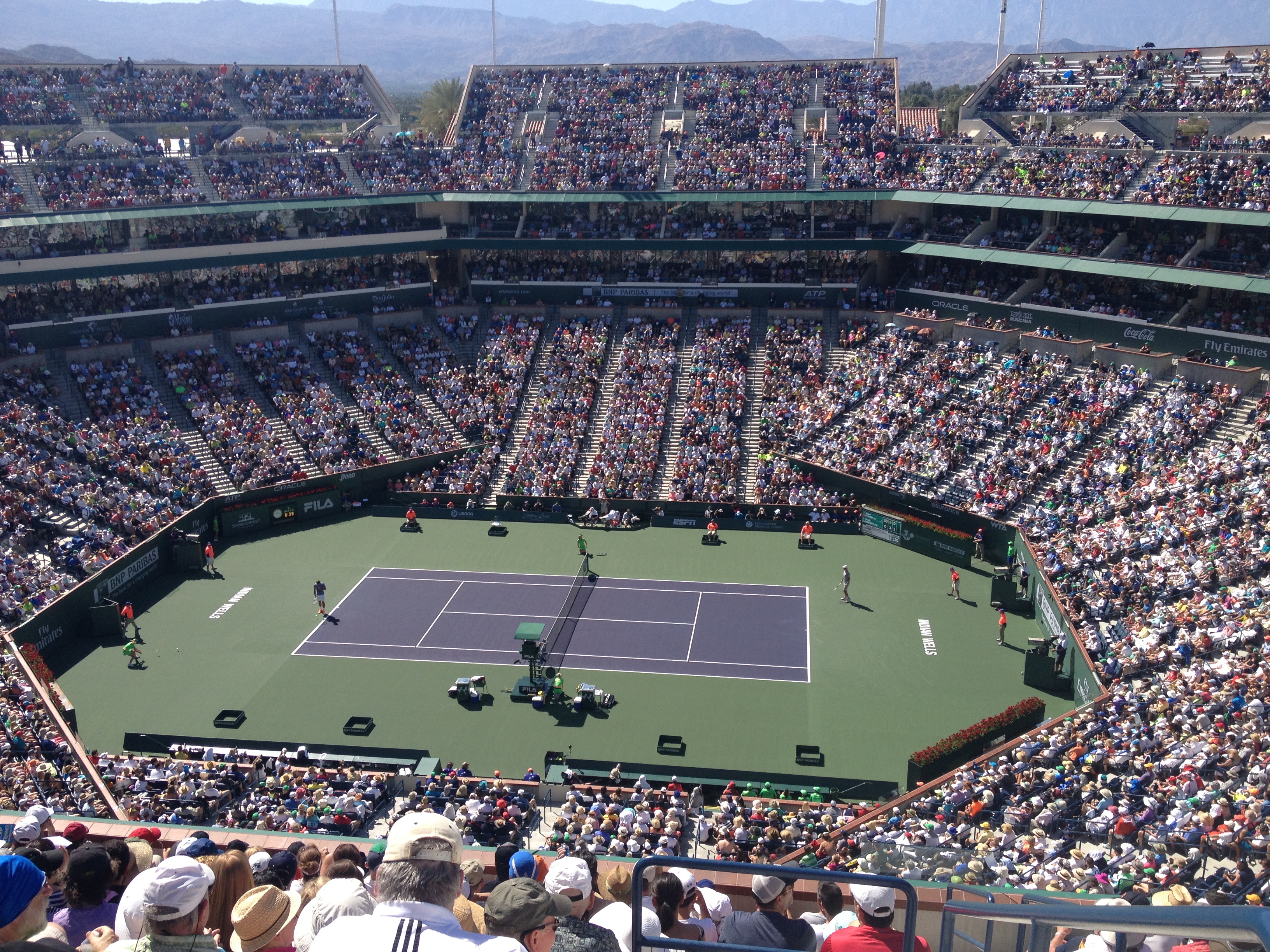
Once More Into the Fray

Summer came just in the nick of time.  I had my surgery in mid-April, and although thankfully there were no complications, the momentum I had started to generate slowed considerably.  I couldn’t exercise for almost two months, but I could and did work every scheduled day.  Work did not end well: it became even more stressful and less satisfying than usual.  Family business related to the death of my parents took up all of my free time and energy.  My weight crept back close to 200 while my fitness level dipped accordingly.  It was not a pretty sight. 

One plus in my line of work, though, is that you have ten weeks off in the summer, and I’m pretty sure that this week I’m going to need all ten to get my body and mindset back to where they should be.  Three have passed so far, and I’d like to think I’ve begun to make some progress.    I’ve been working out and playing tennis on a regimen designed to get me to peak for the district playoffs in August (both my teams ended up qualifying, although not in such dramatic fashion that it bears retelling here).  It’s been a slow process and not a linear one, but I’m starting to groove my strokes a bit better and at the same time improve my endurance in the summer heat.  I even played a match for the first time last week with some of my 40 and over teammates and was less dreadful than I had feared (although my first volley, usually a strength, was understandably rusty).  I still need to work on my serve.  A lot.  Todd offered to spend some time every week helping me build a better motion and I accepted.  With his help I’m going back to a fuller motion which uses the whole body rather than just the arm and shoulder muscles, although the shoulder itself feels much stronger as long as I continue to lift regularly.  I’m building it gradually and there is a lot of syncing of different parts which I haven’t mastered yet.  But I’ve found that the ball goes in almost as often as before, and I can hit maybe a third of the balls reasonably correctly (they go faster and move more, and are difficult to attack) and every seventh or eighth ball very, very well (with something approaching the correct spin, too).  The districts are coming up in four weeks and my goals are to get fitter, stronger, and more match-ready.  Serve-wise I need to develop a smoother and more natural motion using whatever parts of the motion I can count on (during the fall and winter I can try to add others).  I’m not progressing as quickly as I would like, but I have seen improvement.  Whether I can continue to get better will determine not only my success at the 4.0 level this summer but my chances of ever making it back as a solid 4.5.  That’s pressure, but at least tennis pressure is easier to deal with, and less costly, than life pressure, so I’ll do what I can and let the chips fall where they may. 

Tomorrow (or soon) I’ll write more on my hiking adventures. 

March Madness

It’s not supposed to snow close to a foot in the middle of March. Even in New Hampshire. Yet here I am on a “snow day” with my power flickering on and off precariously, while wind howls and snow falls outside. That’s bad news on a number of fronts, not least of which is that the high school team I coach started practicing yesterday. After one day of relatively decent conditions in a parking lot, we’re going to be scrambling for the foreseeable future. Yes, so will our opponents, but we graduated a lot of talent and need the work more than they do, and we lack the steady access to an indoor facility that some of the better ones have. I guess we’ll try to control what we can control and see where that leads us.

My own tennis continues to be a frustrating journey which may or may not ultimately lead me back to where I’m trying to be. Last week our team dropped another close one, this time at Mountainside. Their guys were out for revenge after the 5-0 thumping at our place and they brought all their top players, while for some reason we left the available Jeff Siegel home. Chris and I went against Glenn and B in a close match which ended all too familiarly, with another supertiebreaker going into the loss column. We dropped a close first set when Chris was broken at 4-4, but the real culprit was our failure to consistently return what were not especially fast or high-kicking serves. I dropped my serve early in the second but we got off the mat and took five straight games by getting more accurate with our returns and more aggressive at the net. Then the momentum shifted yet again as they came up with some great shots in the ‘breaker while I stopped moving my feet and hit a hideous double fault (my only one of the match) into the bottom of the net. Overall, though I served better after implementing some changes made during a midweek practice session with Adam Hirshan and John Pelkey: basically, move my front foot close to the line and keep it stationary, and keep my shoulder turned longer. I didn’t describe that particularly well but as long as I don’t toss too far to the left it actually does work better than what I was doing before. The other positive from this match is that I was a good teammate and helped Chris with some advice at certain points when he was struggling. Rather than getting down on myself or my partner when things weren’t going well, I regrouped and we were able to dig in and make it a close match. Ultimately, though, a loss is a loss and I’m 3-4 this season. All those four defeats have come against strong players in supertiebreakers, but as Bill Parcells once observed, “you are what your record says you are”. Right now my record says I’m average, and I don’t like being average, but over time maybe I can change that. We struggled at some other positions too. PJ and Adam, who had played so well against Glenn and B, had more trouble with the bigger-hitting Atherley and King and lost in two close sets, the second a tie-breaker. Jeff Hannum just didn’t show up mentally (again) and lost a match he should have won against Tim Lesko, 4-6, 0-6. The last point of the match said it all as he shanked an easy forehand into the side curtain on his own side of the net. Our two singles player was a new guy from Concord, Adam Lesser, who at first sight looks to be a prototypical baseliner with heavy spin groundstrokes and an aversion to playing the net. He came through easily against Jeff Adie, a doubles player pressed into playing singles on this particular day. Todd and Paul McManus gave us a big point at third doubles, winning 4 and 4 against a decent team. Todd hit some crushing overheads while Paul played steadily and was able to hold serve at key moments. That allowed us to outscore Mountainside over the home and away legs of the competition by 7-3, a significant margin. If we can beat HH 3-2 to gain a 5-5 split, and get seven or more points against the other teams, we should make districts yet. I can only play two more times, though, since I found out that during April vacation I have to have hernia surgery. The doctor was optimistic about me returning to work and even to some types of physical activity within a week, but said I need to stay away from the twisting and turning of tennis for about six weeks. I don’t get to hit much in April and May with my coaching anyway, and at least this way I’ll be able to come back and play during the summer. Still, it will be agony if our team goes right down to the wire competing for that second spot. Maybe I can help with some strategy or moral support if nothing else.

Finally, it’s that time of year for my favorite sporting event, the NCAA Men’s Basketball Tournament. Last year I tried to watch all the games and keep a running diary on my iPhone of what was happening, and it worked for three days before I actually got a life. This year I make no promises, but will post what I can. I’m not a big preview guy but for the moment I would like to highlight one matchup (or potential matchup) worth watching at each round of competition, along with my prediction for each.

First-round games (formerly “play in”): Long Island University-Brooklyn (vs James Madison). The Blackbirds play streetball at its finest, with no-look passes, tricky dribbling and almost non-stop fast breaks. This is the third consecutive Big Dance for their core group, and if the 2012 Northeast Conference Player of the Year, Julian Boyd, hadn’t torn his ACL early in the season, they would have landed a better seed and might even have had a chance to win their second- round game. A glaring lack of height, a near-total absence of defense, and an impending matchup with Indiana will keep them from coming close this time, but they’ll still be one of the most fun teams to watch, so catch them while you can.

Second-round: Bucknell (vs Butler). Twenty-seven years ago, player-coach Dave Paulson, a senior-to-be at Williams College, led the Con-20 dorm team to the championship of the St. Paul’s ASP basketball league with wins over Brewster, Ford and my own Center Upper squad. This spring, after a long journey through the coaching ranks, his Bison claimed the Patriot League title. I’ll be rooting for him in his first tournament game against Butler. Dave may be destined for bigger things once this senior-laden team completes its season, but don’t think Bucknell is an automatic one-and-done. Mike Muscala, one of the nation’s most versatile big men, leads a fundamentally sound team that beat Arizona in last year’s NIT. This game should be in the 50s or low 60s and go right down to the wire.

Third Round (weekend games): Saint Louis (vs Oklahoma State if predicted seeds hold). Saint Louis is a terrific story. The Billikens pushed 1-seed Michigan State to the limit in last year’s third round and many observers said the coaching job done by Rick Majerus with that group was one of the best they’d ever seen. The team returned all its key players but unexpectedly lost its coach when Majerus was forced to retire during the summer for health reasons and then died early this season. This an unselfish team that plays terrific defense and finds the open man, and interim coach Jim Crews has them back in sync after an understandably slow start. Oklahoma State is a team to watch in its own right, with some great athletes and point guard Marcus Smart, a terrific all-around player and, although just a freshman, an inspiring leader too. I’ll root for whichever team emerges from this game to give top seed Louisville a run and I’m confident that they will.

Sweet Sixteen: Michigan State (vs Duke if seeds hold): All coaches care, but take one look at Tom Izzo on the sidelines and you can tell he cares with every fiber of his being. Izzo’s teams are renowned for their rebounding, toughness and ability to peak in March. If their outside shooting holds up, the Spartans have the size and physicality to take down a Duke team that has only lost once with senior forward Ryan Kelly in the lineup.

Elite Eight: Miami-FL vs Indiana (if seeds hold). Jim Larranaga, the magic man behind George Mason’s miracle run to the Final Four in 2006, is doing it again. In just his second year in Coral Gables, the relentlessly upbeat Larranaga took a senior-laden team that had never previously done much to ACC regular-season and tournament titles by stressing defensive improvement. Indiana, a terrific offensive team, has struggled with teams like Wisconsin and Butler that slow the tempo and grind out possessions. Miami fits that mold, and I think the Hurricanes, led by point guard Shane Larkin (son of Baseball Hall of Famer Barry) pull the upset here.

Final Four: Florida vs Miami (if my predicted bracket holds). Florida had the best point differential in conference play of any BCS team in the country this season and not all of that can be attributed to playing in the mediocre SEC. The Gators are my surprise pick to come out of the Midwest, where they are seeded third. Now fully healthy for one of the few times this season, Florida will edge Miami in a defensive battle as Billy Donovan, just as he did in ’06, ends a great Larranaga run.

Championship Game: Gonzaga vs Florida. Not too many people think Gonzaga can make it to this point despite the Zags’ number 1 seed in the West region, but this is a deep and talented team that does everything well. Unheralded Kelly Olynyk has had an All-American season alongside Elias Harris up front, several quality guards offer complementary strengths, and the defense has improved over the course of the year. Wisconsin will pose a major threat in the Sweet Sixteen but a miracle finish gets Gonzaga through, and they have too balanced an offense and too much interior presence for Ohio State in the next round. They win a thriller over Louisville (or perhaps Saint Louis, my Cinderella pick), to reach the final game and then use their greater depth and superior free-throw shooting to knock off Florida, 78-73. Do you believe in miracles? Yesssssssssssss!!!!!

Down for the Count

The last couple of weeks have brought a predictable slacking to my fitness routine. I have allergy problems and post-nasal drip, and when a cold virus gets mixed in all too often it turns into bronchitis. Like last week. It was all I could do to keep the school-meeting-home carousel going full tilt, and my workout routine suffered, though I did play tennis (badly) three times. A nasal steroid and an inhaler stopped the illness before it got really, really yucky, but yesterday was the first day since I got back from CA that I truly felt normal. Unfortunately, my new normal includes an umbilical hernia, which I’ve had for over a year but finally got diagnosed as it’s starting to hurt more regularly. I’m going in for a surgical consult on Thursday and so for the time being I am reduced to hoping I don’t have to miss significant tennis/workout time, but nonetheless worrying that I most likely will.

Tennis is beginning to fall into a pattern: I’m able to beat up on the weaker 4.0 players but just can’t seem to win the close ones against the top guys. My first weekend back the senior team had a big home sweep against Mountainside, which luckily didn’t bring a terribly strong lineup. Jeff S and Rick both posted straight-set wins, though Jeff trailed deep in the first set against the improving Richard King before wearing the big guy down with his slices and lobs. Rick’s opponent, Tim Lesko, was aggressive but erratic, and except for one hot stretch where he won five straight games put up only sporadic resistance (6-0, 7-5). The big surprise was our number one doubles team of Adam and PJ Cistulli, a longtime friend who coaches with me at the high school level. PJ has a smooth all-around game and he and Adam meshed well together in a 6-4, 6-0 demolition of Glenn and B, who moved up to play number 1 doubles (Atherley did not play in this match and so King moved to singles). In B’s defense, he had lost a large portion of his left year in an accident at the lumber mill where he works and did well just to represent at this match, albeit in taped-up fashion. But the two veterans just didn’t have an answer for our guys’ crisp volleys and frequent poaching. I sniffled and sneezed through a comfortable but never totally secure 6-2 6-3 win with Chris McCallum against Scott Goodwin, recently promoted from 3.5, and Jon Mellen, recently returned to the court after missing several months with a back injury. Both guys had hard forehands and solid first serves, but we were much more aggressive to the net and that paid dividends. I also took my returns early and hit some forcing shots, while Chris got to the net so quickly it inspired me to do the same. I held all my serve games through good placement and a high first serve percentage, which was fortunate since the opposition atypically returned Chris’s lefty serve well and broke him twice. I didn’t have quite my full energy level but luckily it wasn’t a particularly long match. Our guys made it a clean sweep with a straight-sets win at third doubles by Duckless and newcomer Paul McManus, a solid player from the Manchester area whom I’d met (and liked) in my previous time at 4.0 years ago. Five points from any match is huge in our league, which uses individual courts won to determine the standings. Afterward I sat around talking strategy with Chris and Adam for quite a while. At the end Adam said that this might have the potential to be his all-time favorite team because it has so many excellent players and nice people. It could be right up there on my list too, although I once captained a team to the 4.5 nationals- mostly playing third doubles- and have a lot of great memories from that too. But there’s no doubt a big win against a strong time is all the more meaningful when you can share it with people you’re close to. I’m very lucky that at 43 years old I can still have that special feeling associated with being part of a successful team.

Last Saturday we were a somewhat less successful team as we lost (2-3) an early-season showdown for first place with what looks to be our toughest challenger, Hampshire Hills of Milford. You’re almost tempted to bring ice skates when playing at HH because of the slick surface, but this year I had heard they had slowed down their legendary fast courts somewhat (as a finesse player this was music to my ears). Unfortunately the rumor proved unfounded: HH had had the courts cleaned and that had temporarily made them slower. By the time of our match, the surface was obviously good and dirty again, because it was as treacherous as ever. Jeff took a close straight-sets win over HH’s stud player, Mike Auger, while Adam shifted to the singles and went aggressively to the net to claim a supertiebreaker win against Dan Protzmann, who brought some sketchy calls to the table but ultimately not enough game. Doubles, though, was a different story. Duckless and McManus got blown off the court in the first set, then made the second close but ended up falling short. Chris M and Todd (back from vacation) served for the first set but couldn’t run it out and lost the second badly against a solid pair. That left it up to yours truly, playing with PJ against Dave Freel, a quick player with a heavy topspin forehand who had been temporarily bumped to 4.5 before coming back down, and my old nemesis Tom Nieva. Hampshire Hills seems to grow Tom Nieva-like players with disturbing frequency: a big-serving lefty with a monster overhead who knows how to take advantage of the fast courts to win quick points. He’s not terribly effective off the ground, but he doesn’t have to be: he’s all over the net and he ends most points before you can really get them started. And, it must be said, he takes virtually all of the close calls on his side of the net. That certainly doesn’t make him unique, and he’s less annoying about it than most of his breed, but when you combine it with his HH-friendly game you’re facing a lethal Schwarzenegger-like cyborg opponent. He didn’t break me, but he did get the better of us, just like he did four years ago when he beat Gary Roberts and me in an 11-9 supertiebreaker on that same court which kept our team out of the districts. I still remember an easy backhand volley at match point in our favor which I failed to put away. That, thankfully, would not be repeated, but we did start well, winning the first set 6-4. Both Dave and I struggled with our serves, but since he started the set for his team we were able to break him twice while I lost my delivery only once. I was happy because in my previous losses I had always lost the first set, but unfortunately I seem to find new and unexpected ways to lose quite regularly now. This week, to give credit where it’s due, our opponents raised their level. We lost a couple of long deuce games early in the set and couldn’t get our mojo back, while they painted the lines with regularity in a 6-0 drubbing. I didn’t go into the supertiebreaker that followed expecting to lose this time; in fact, I thought our chances were better there than in a full set given the beat-down we had just absorbed and my still-under-the-weather condition. But our opponents continued their hot streak through the early part of the ‘breaker and went up 4-1. I played a couple of strong service points to draw us closer, but then Dave hit a monster overhead off of what I thought was a good lob, and we never could get back even after that, losing 6-10. Looking back on this match now, I probably lobbed too much. Yes, it’s my bread and butter, but even a mediocre overhead is almost impossible to return on that court, and those guys weren’t anything special as volleyers. I have to get more aggressive with my groundstrokes versus net players and I have to gain more confidence in my serve. I’m even thinking about taking a serve lesson at some point, that’s how desperate I am. Just by improving those two areas I could definitely be a top-flight 4.0 or low-end 4.5 again, but I’m not there yet and it’s frustrating to see another winnable match slip away. This coming weekend we go to Mountainside, so it’s conceivable things could be, in the immortal words of Chevy Chase, “deja vu all over again” unless I find a way to break out of this Groundhog-Day like pattern. For the moment, I’m still trying to prove I have what it takes.

Not my kind of place

My celebrity crush

My celebrity crush

Grauman's Chinese Theatre

Grauman’s Chinese Theatre

Hooray for Hollywood (note sign in distance)

Hooray for Hollywood (note sign in distance)

If I ever get to meet Sandra Bullock, I’m absolutely certain it will be love at first sight for at least one of us. For the moment, however, I have to content myself with a couple of postcards (fully clothed, I might add) of the world’s most beautiful woman courtesy of what has to be the world’s largest Hollywood memorabilia shop. Unfortunately, that may well have been the highlight of my day among the stars. The traffic there is just brutal, which I know is typical of big cities, but some of the LA freeways take “brutal” to heretofore unseen levels. I can’t imagine driving in this regularly: merely riding in a car as a passenger is a draining experience. Once you get to the Mecca itself, there are some impressive shops and theatres (Grauman’s Chinese Theater, which was hosting the premiere of Jack and the Beanstalk the next day, was perhaps the most impressive) but tons of tourist traps as well. If you aren’t being approached to take a picture with a transvestite in a police uniform, you’re fending off wanna-be rappers trying to foist their latest CDs upon you “for just a small donation”. Numerous tour companies compete for business on their buses to the stars’ homes, while souvenir shops compete to see who can sell the most junk at the highest prices. It’s a great place to visit (kind of) but I certainly wouldn’t want to live there. Well, unless I had Sandra to go home to…